
RESEARCH CITED
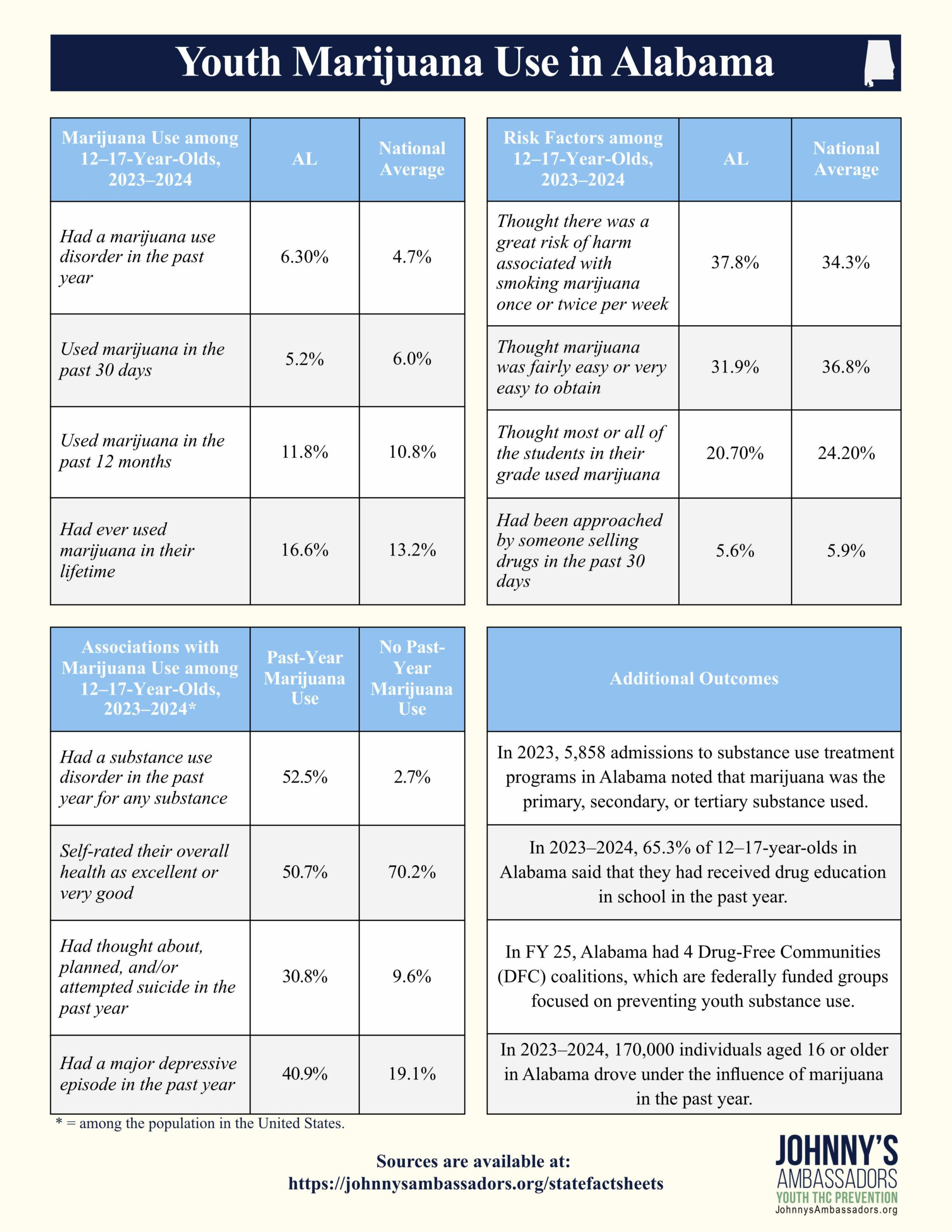
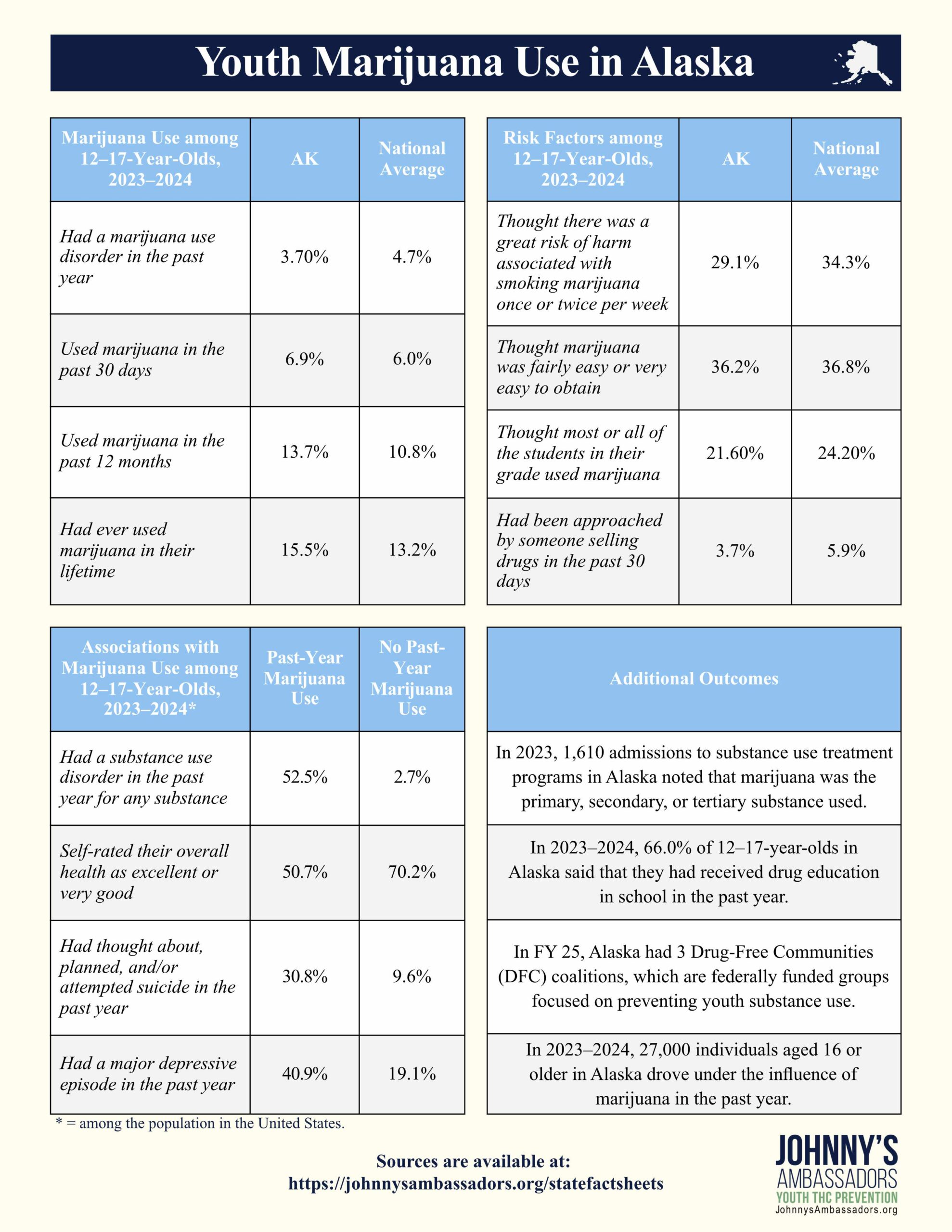
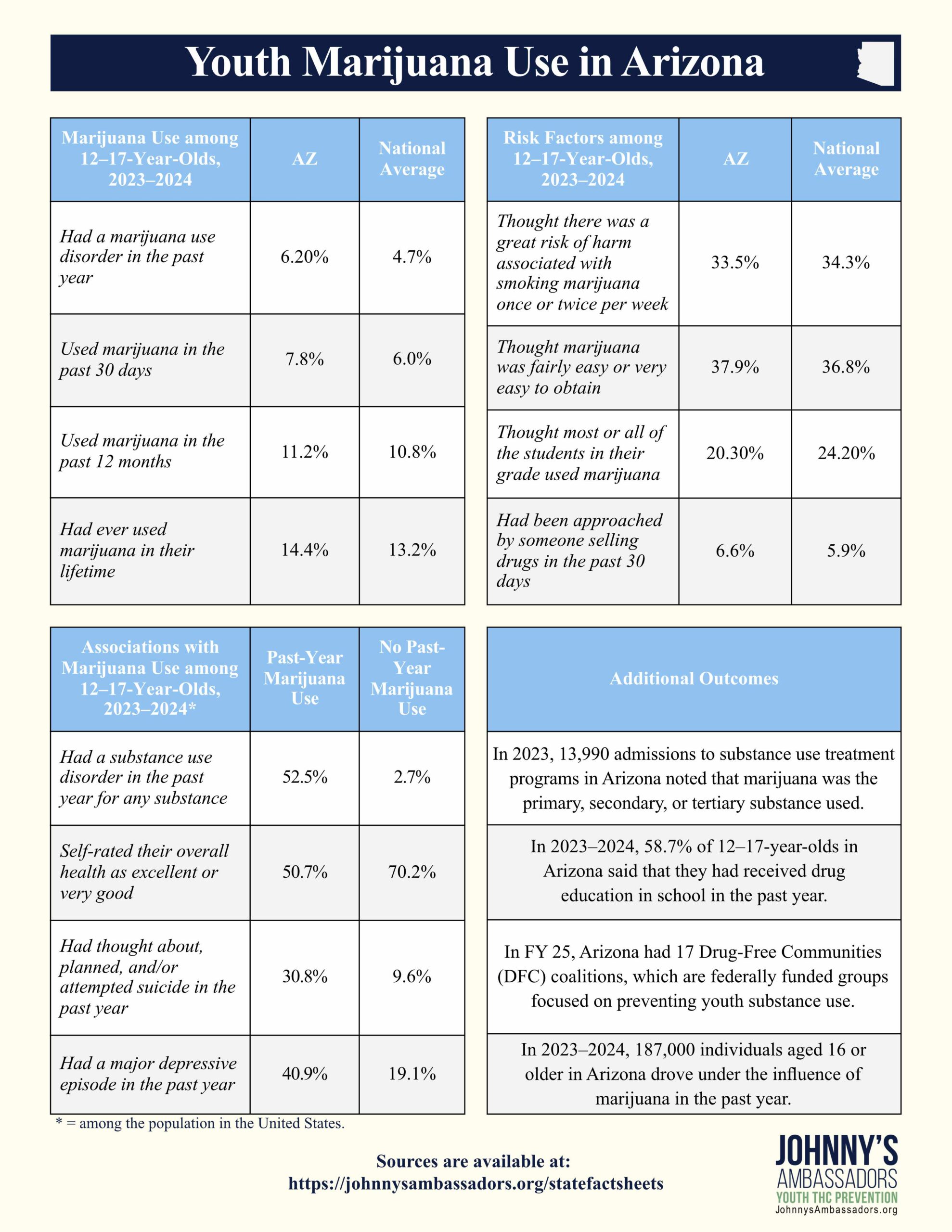
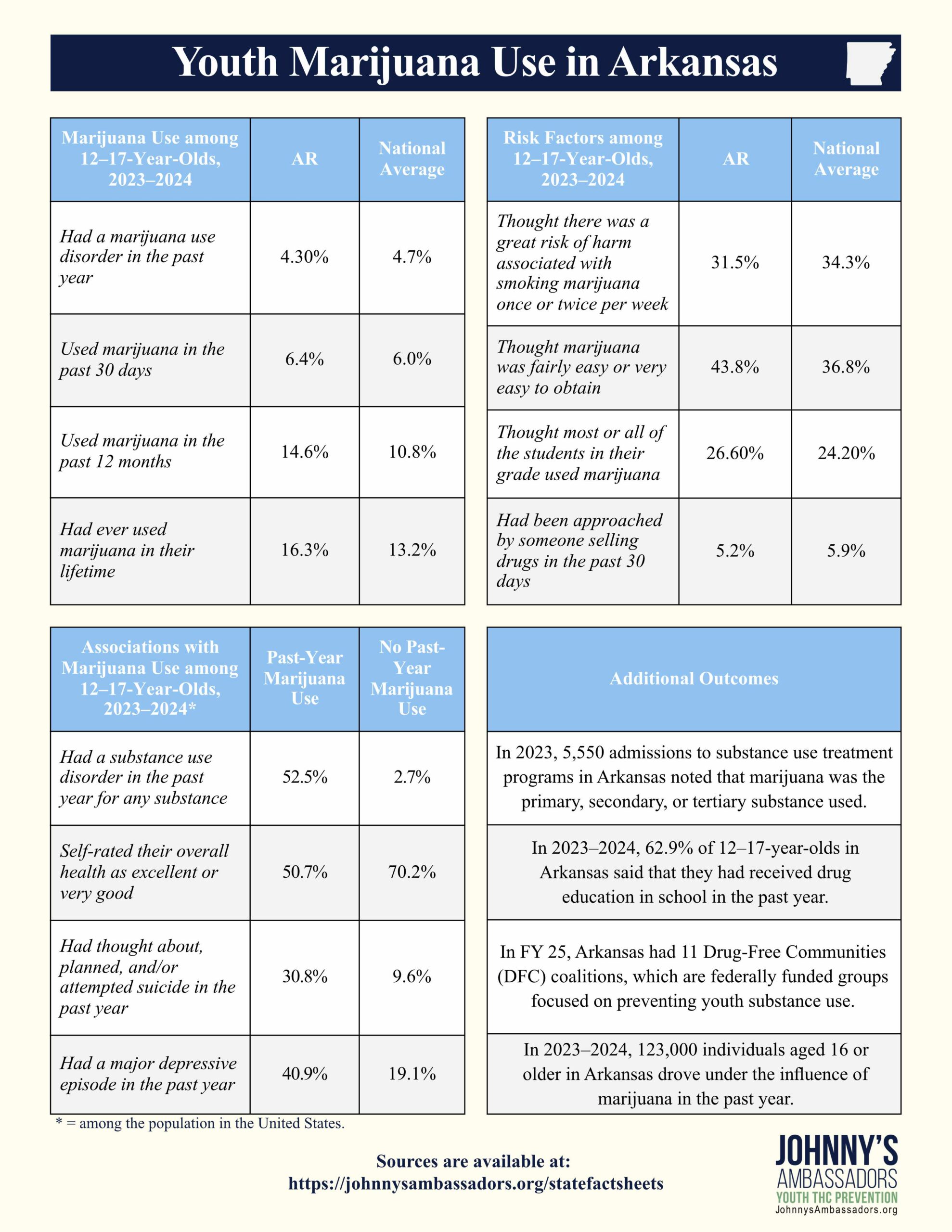
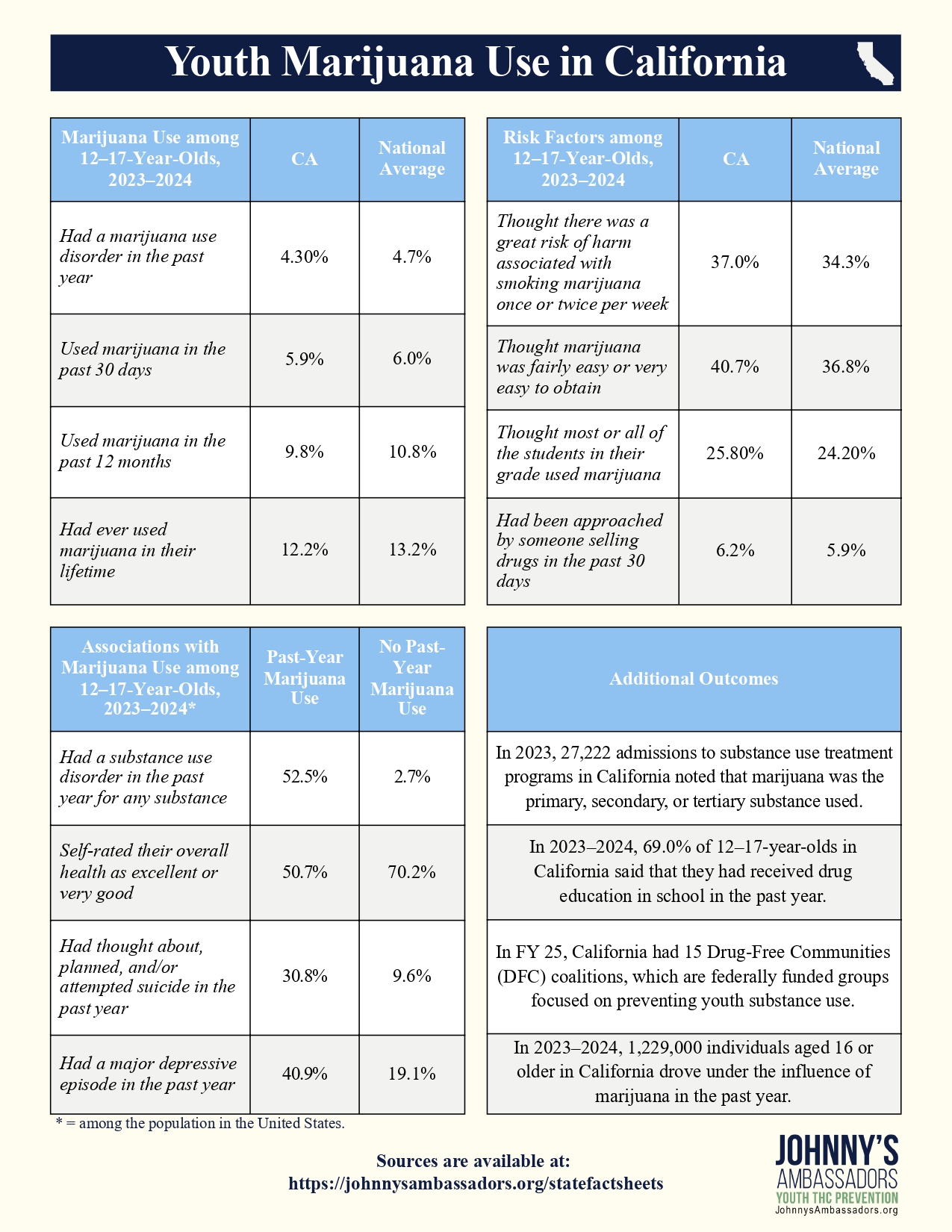
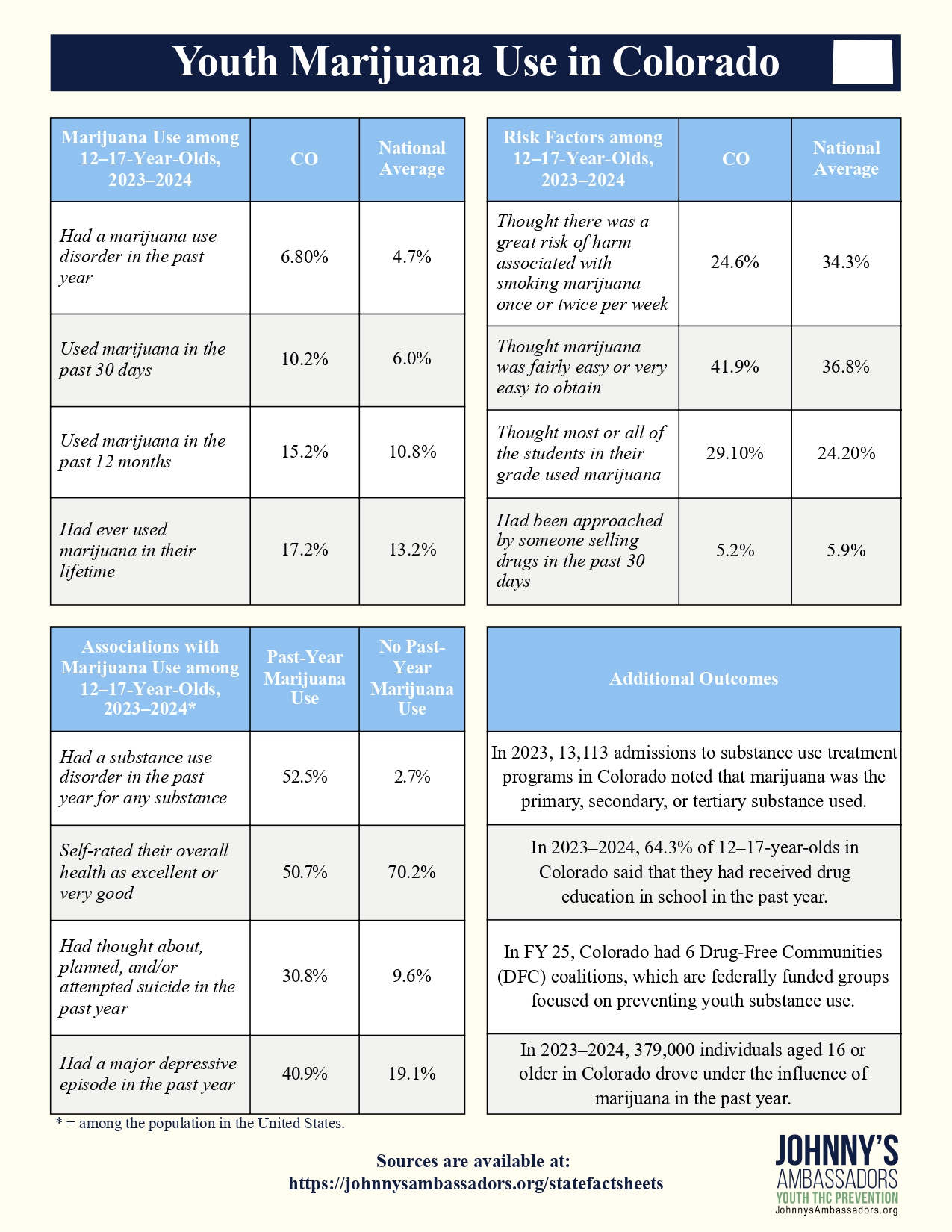
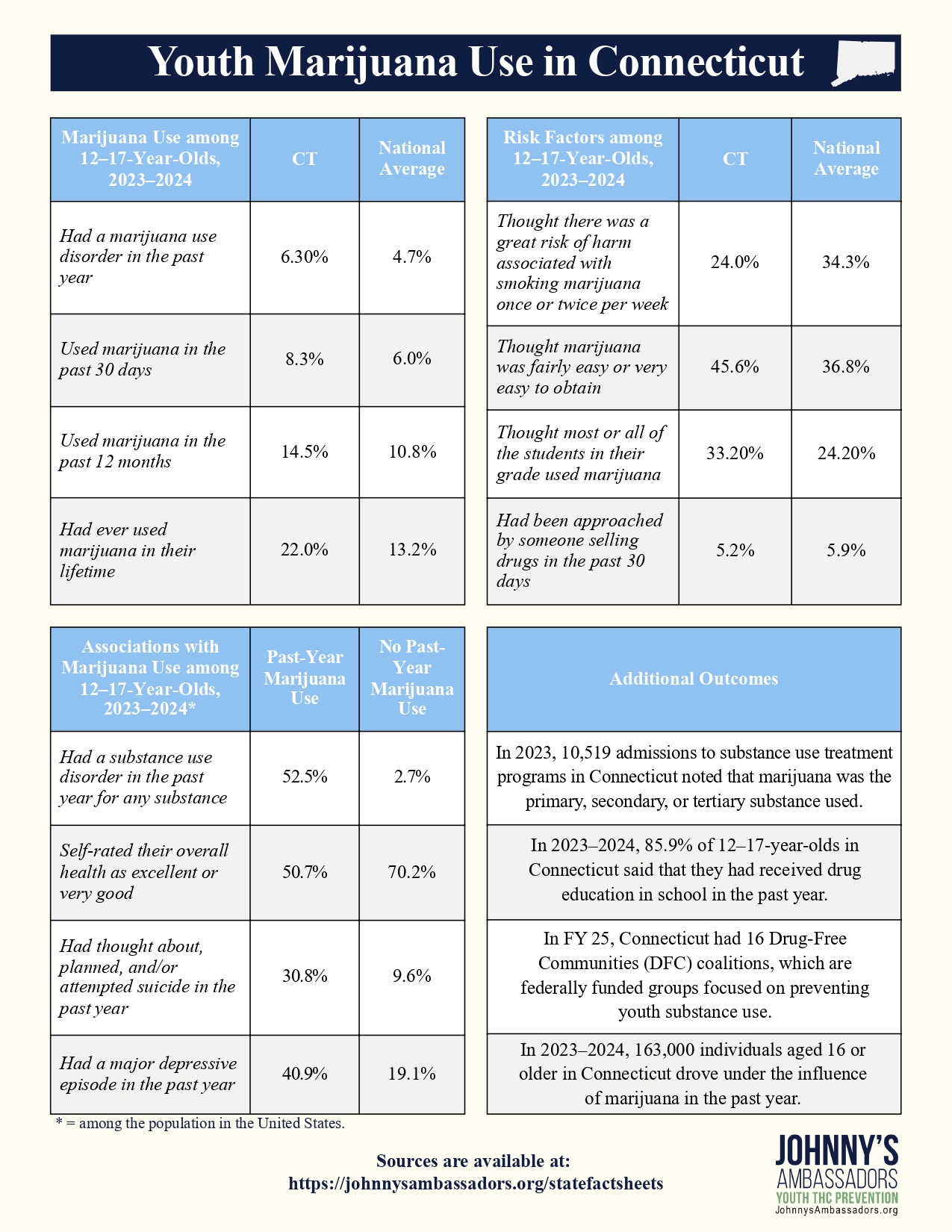
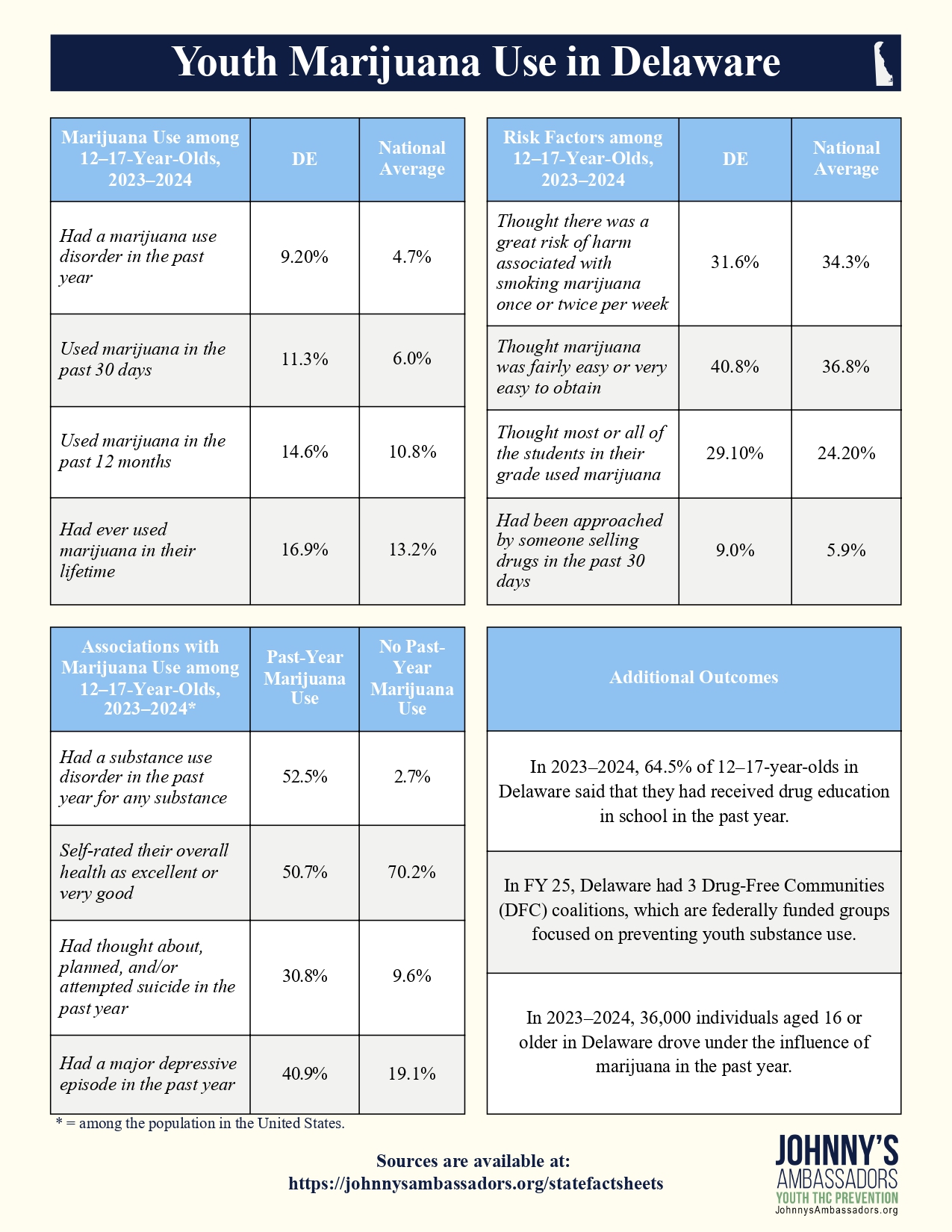
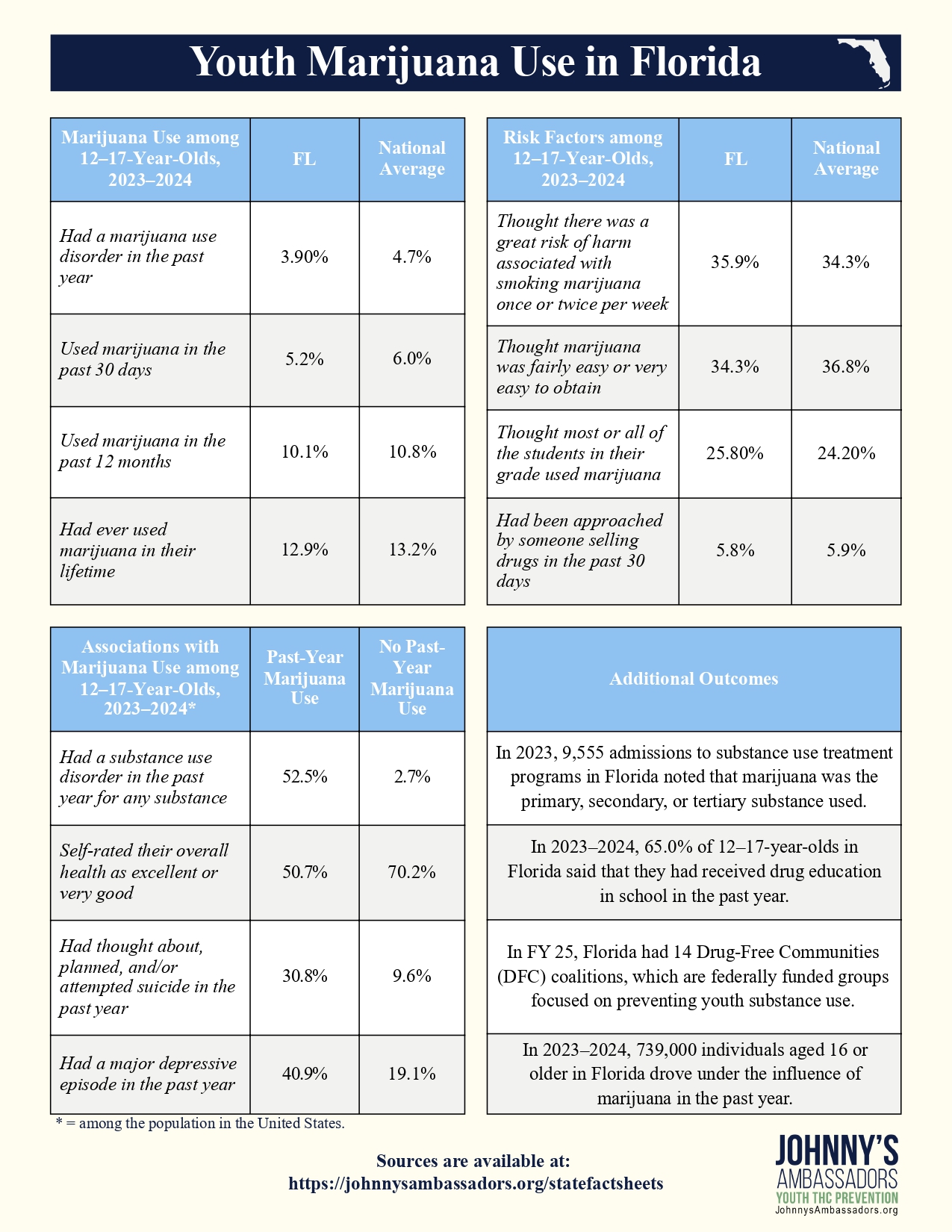
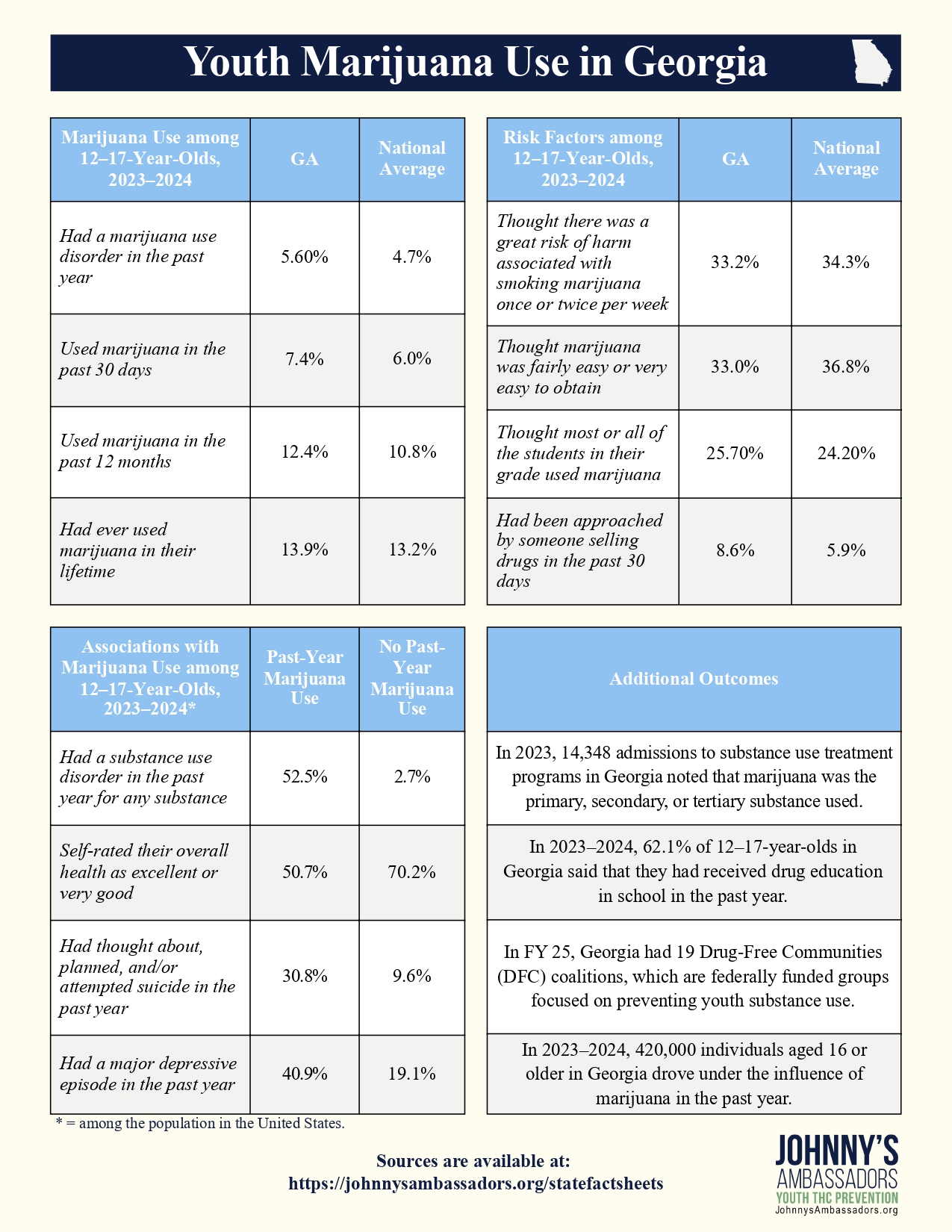
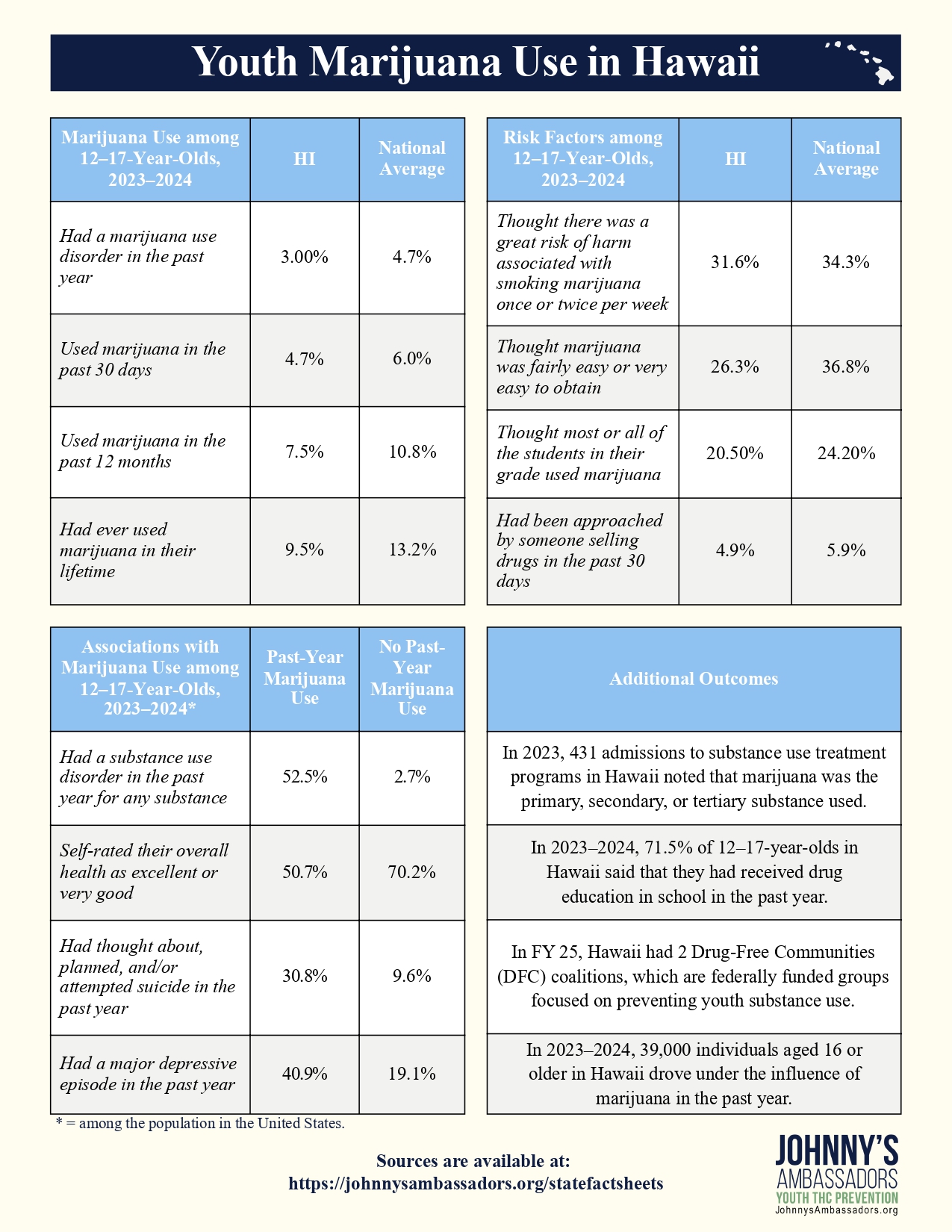
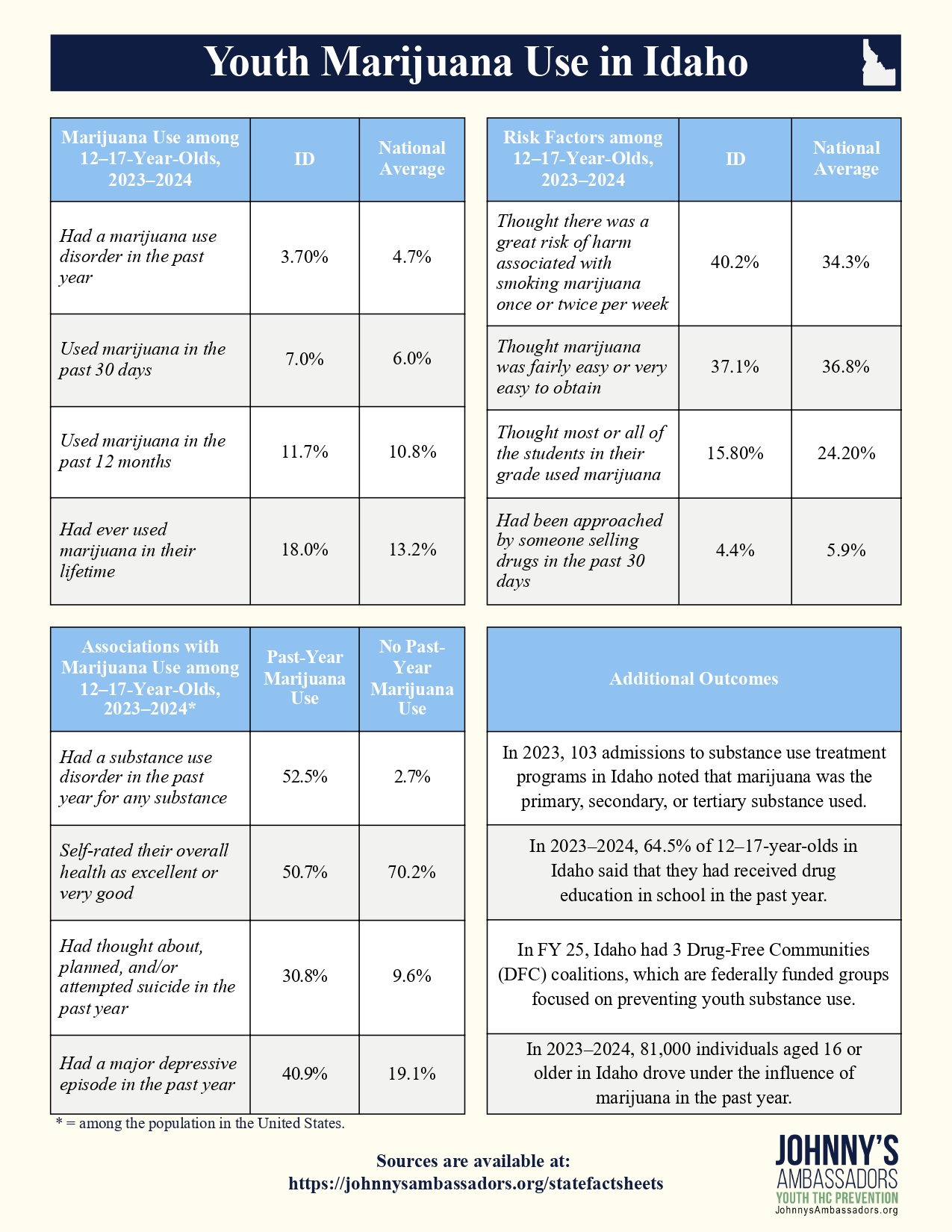
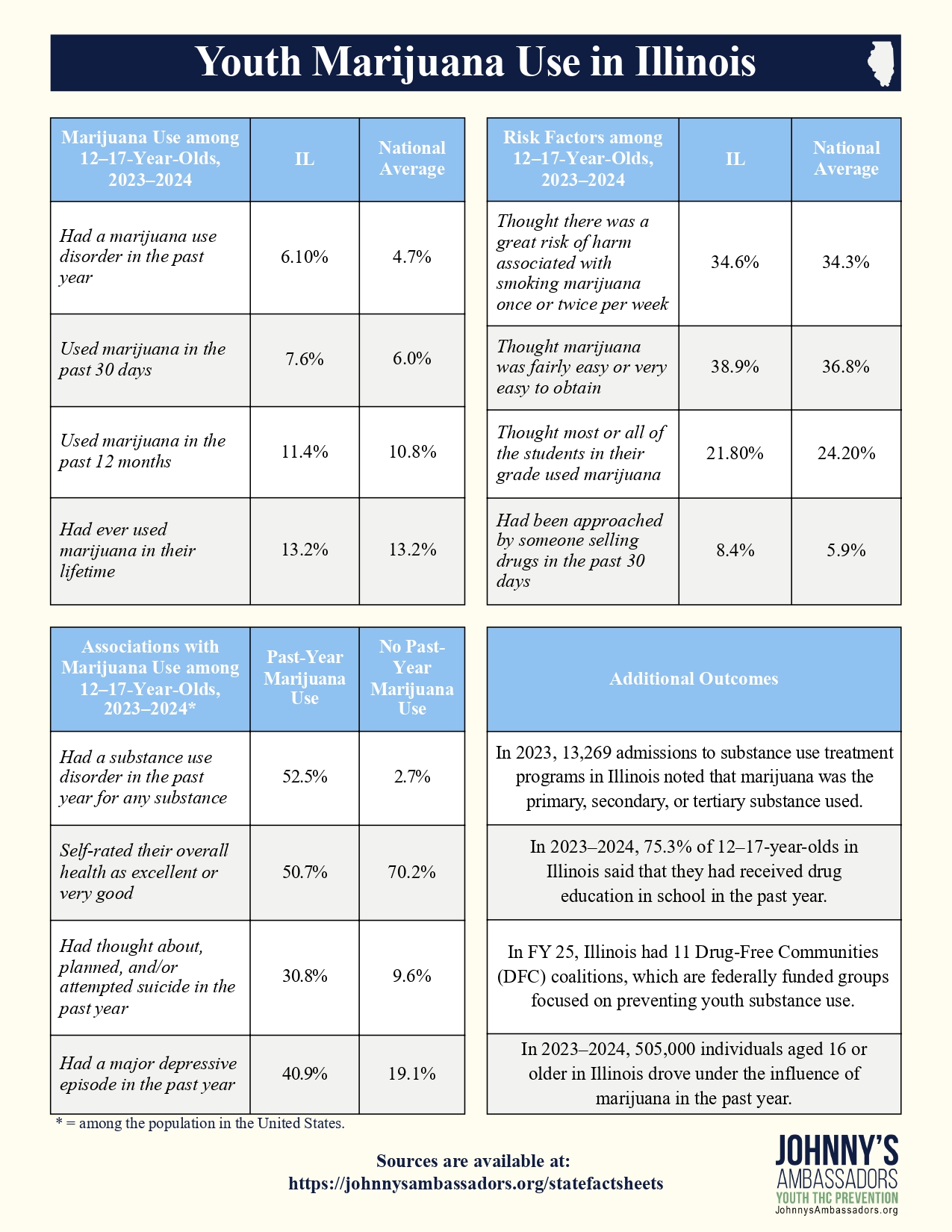
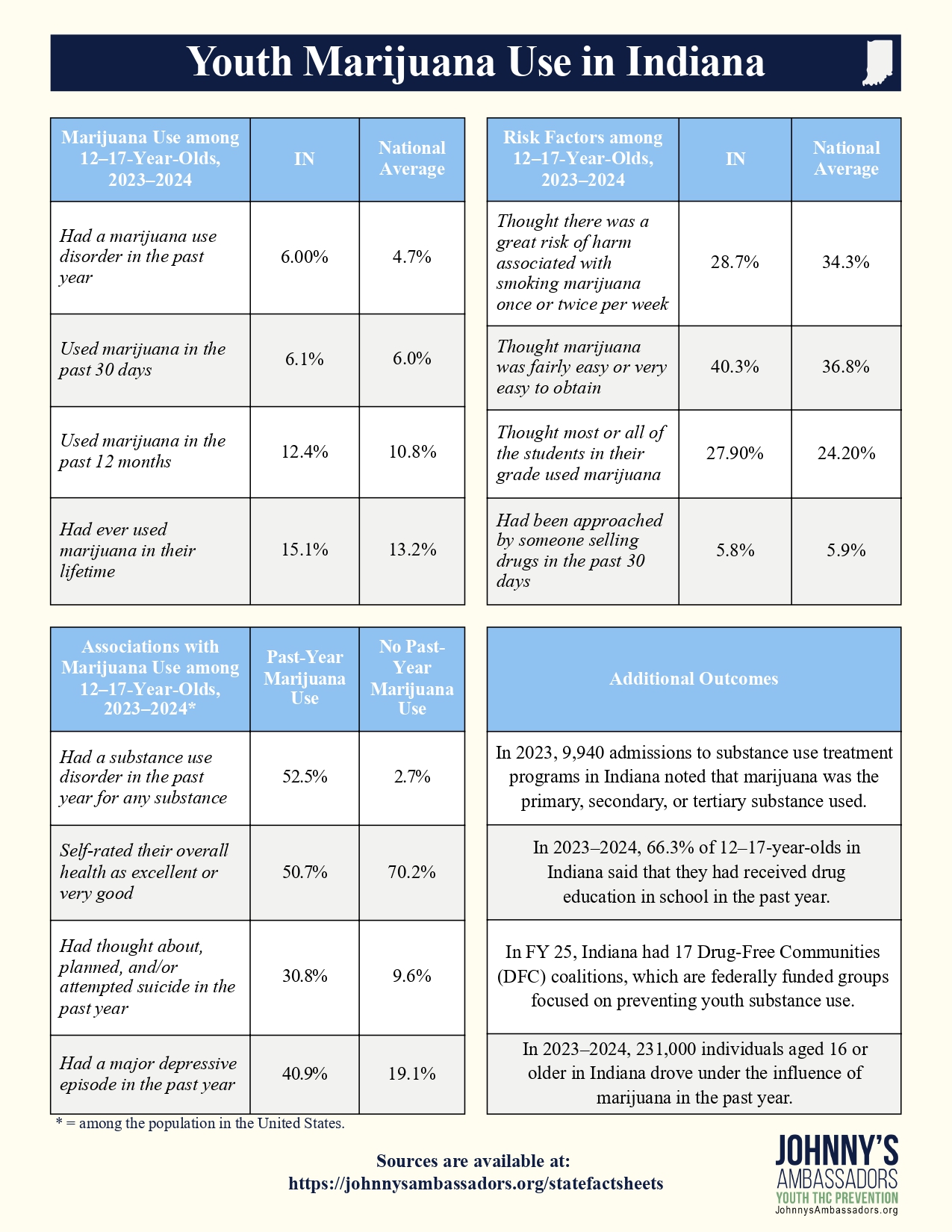
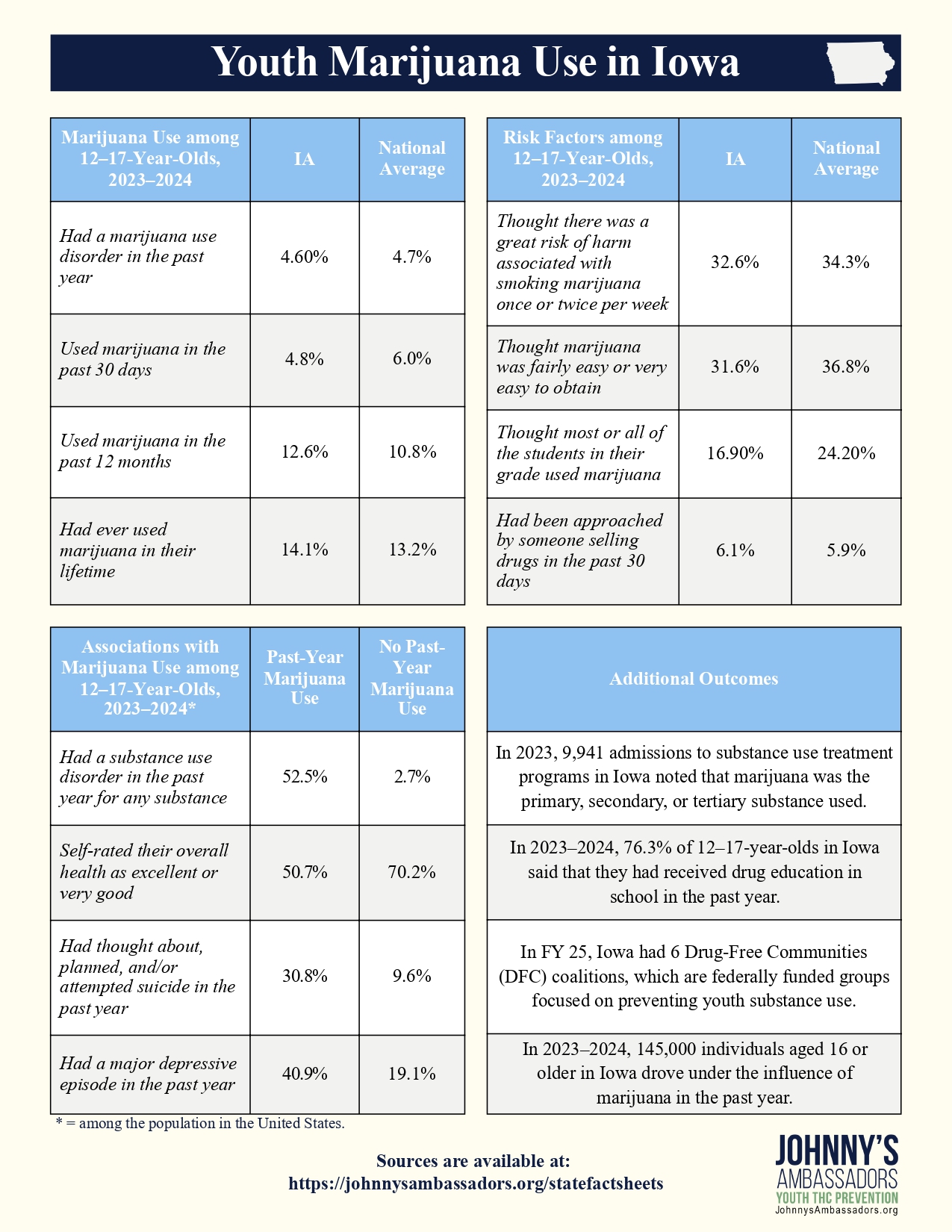
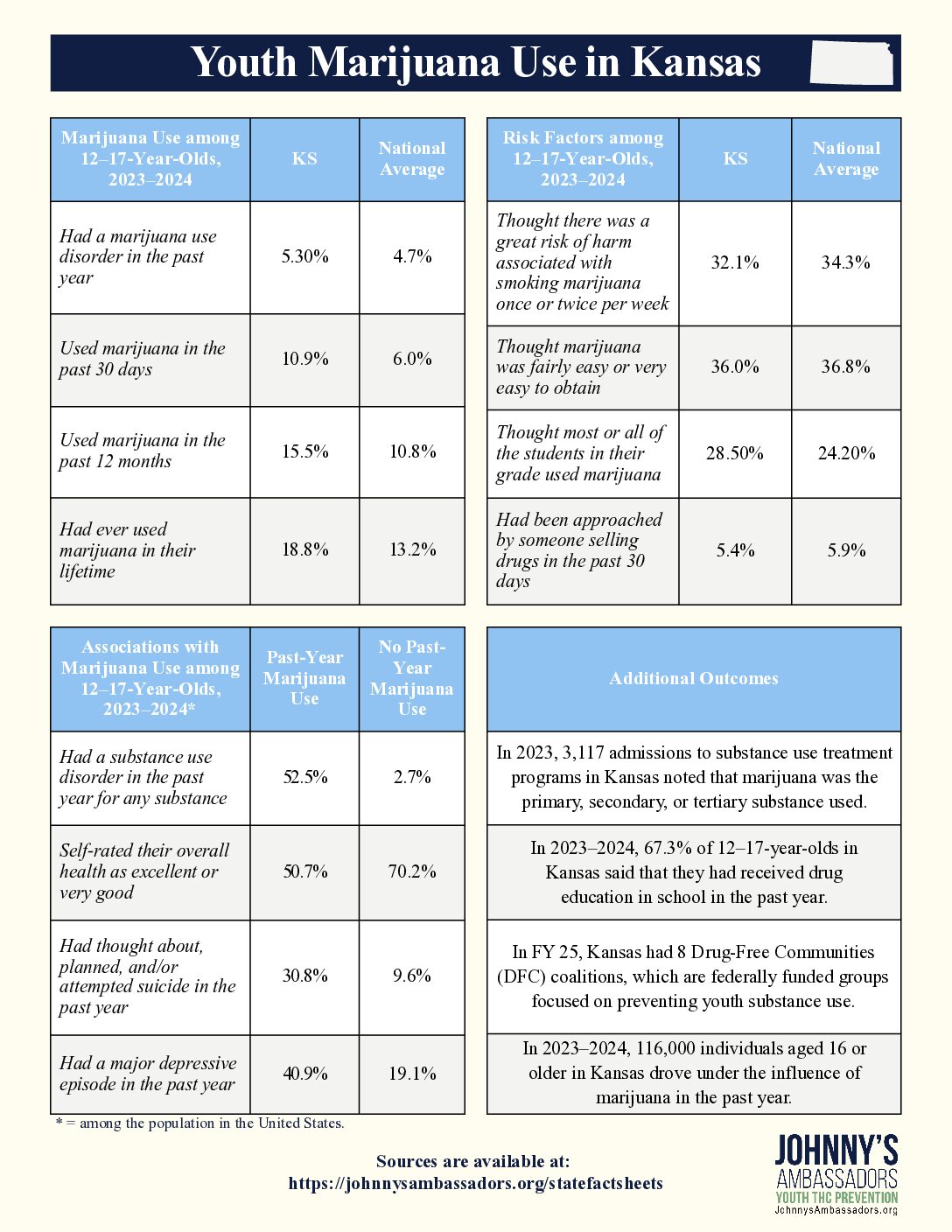
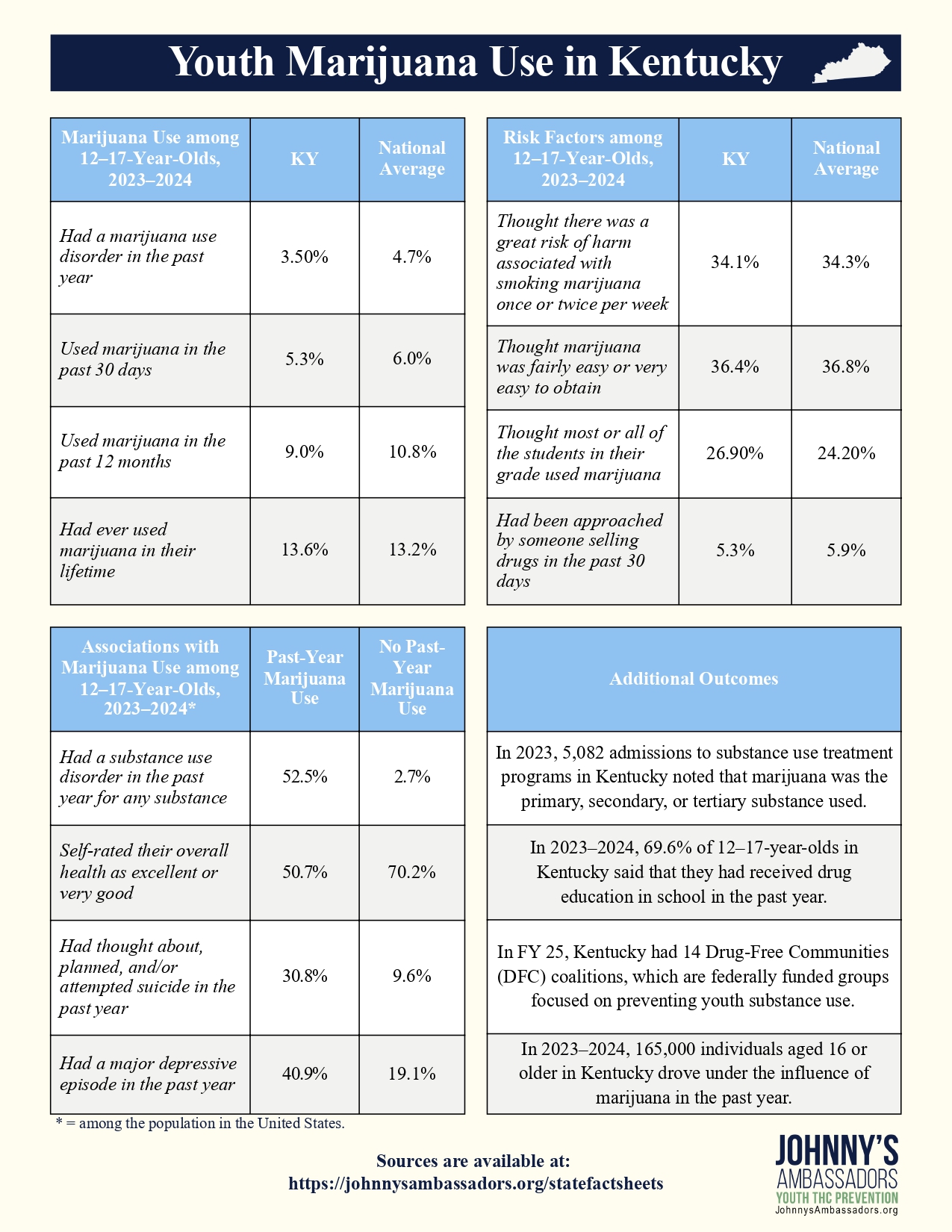
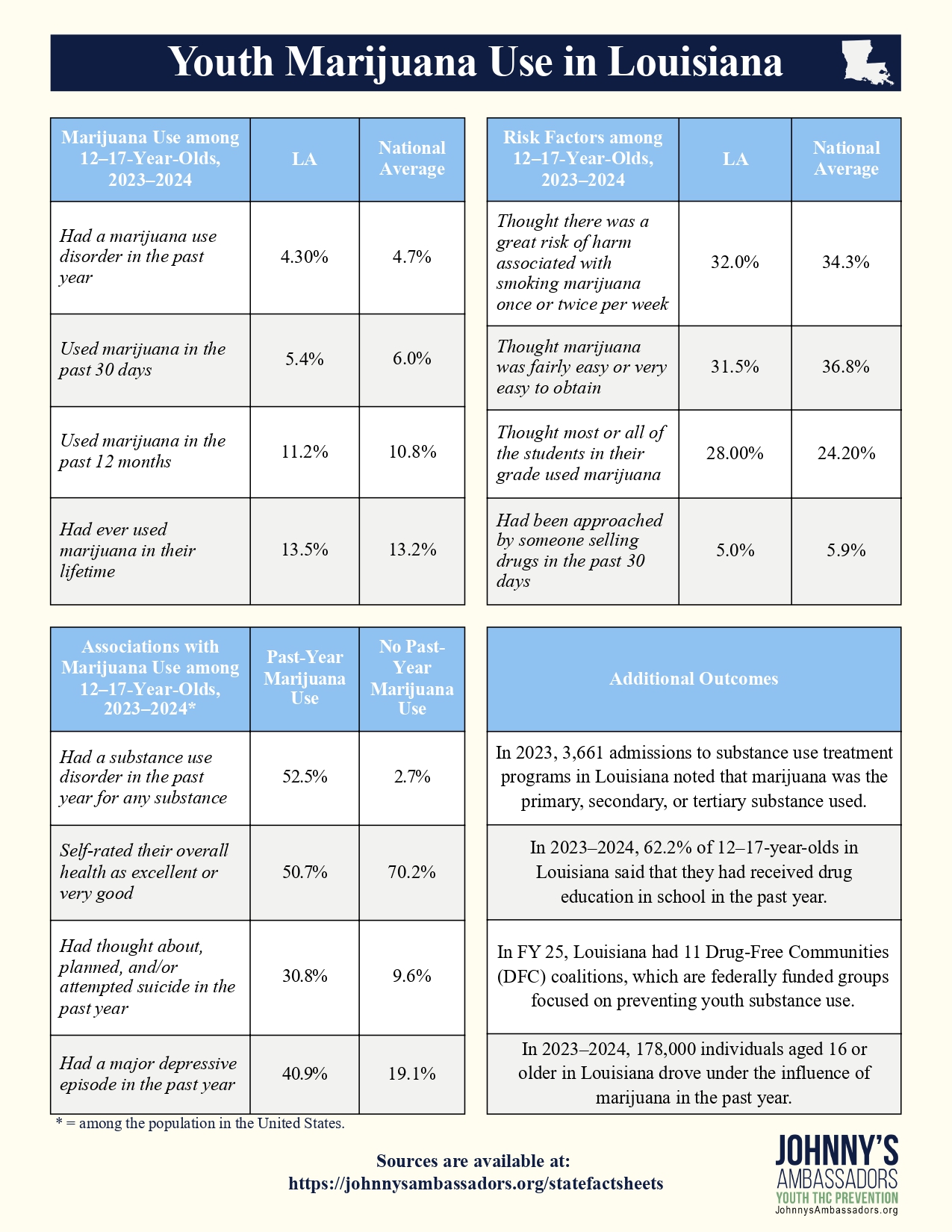
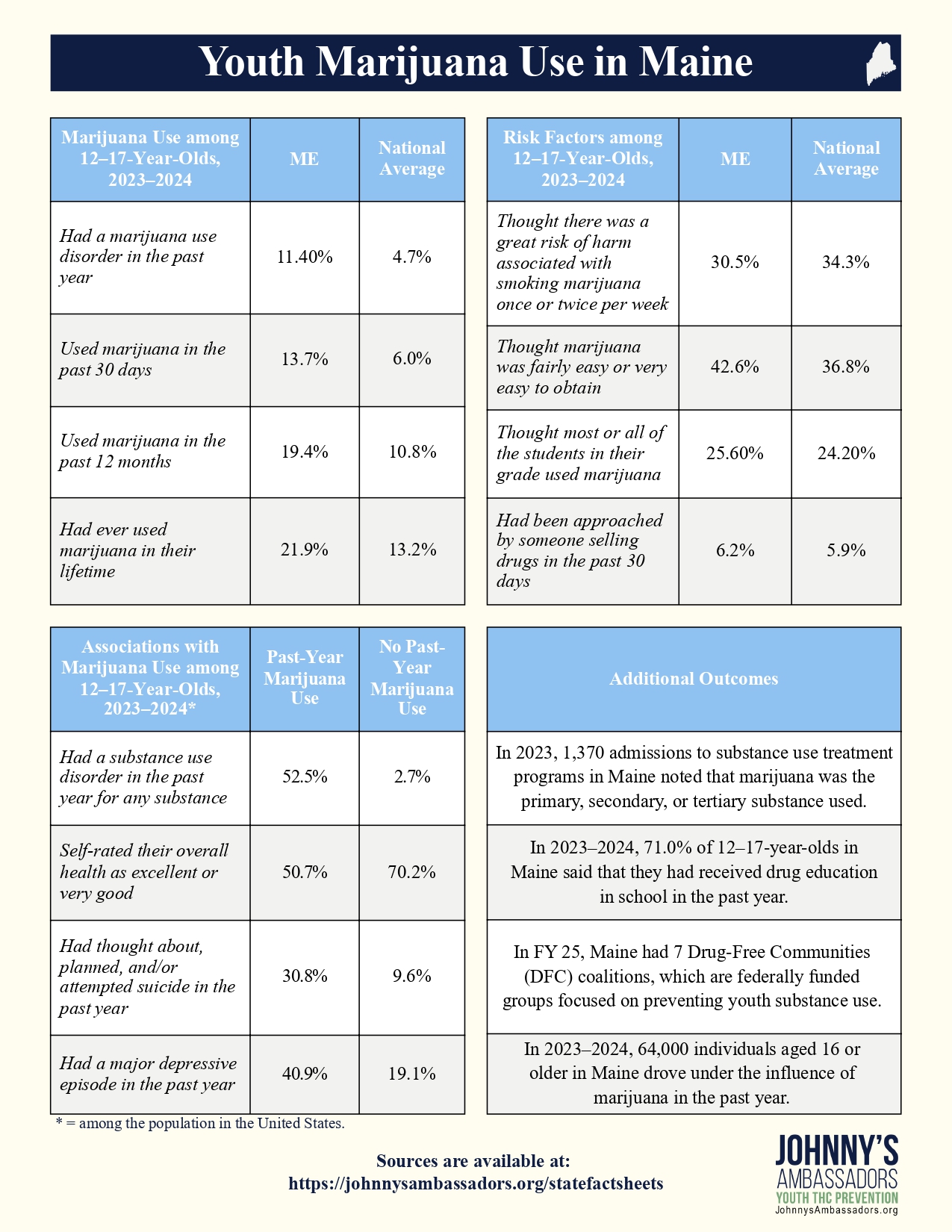
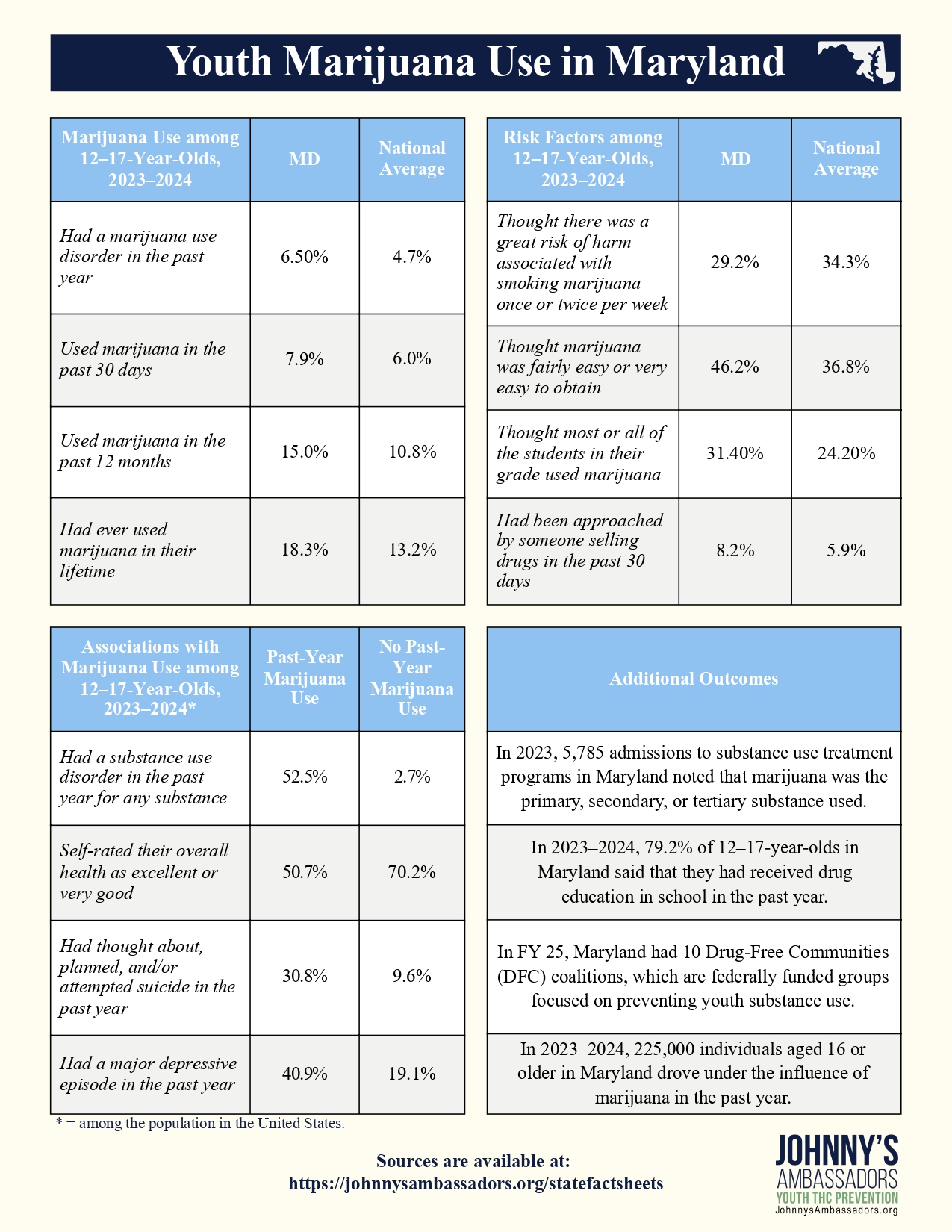
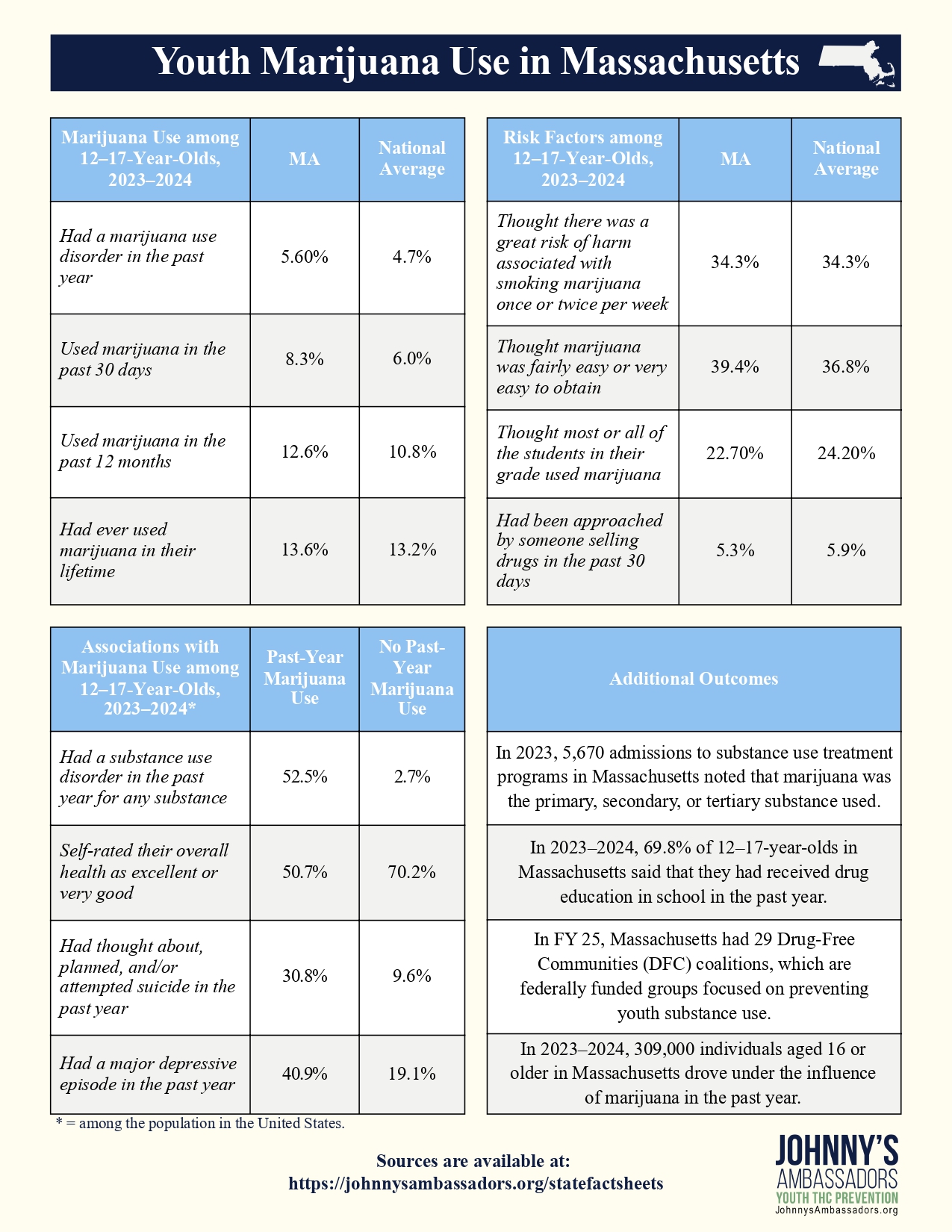
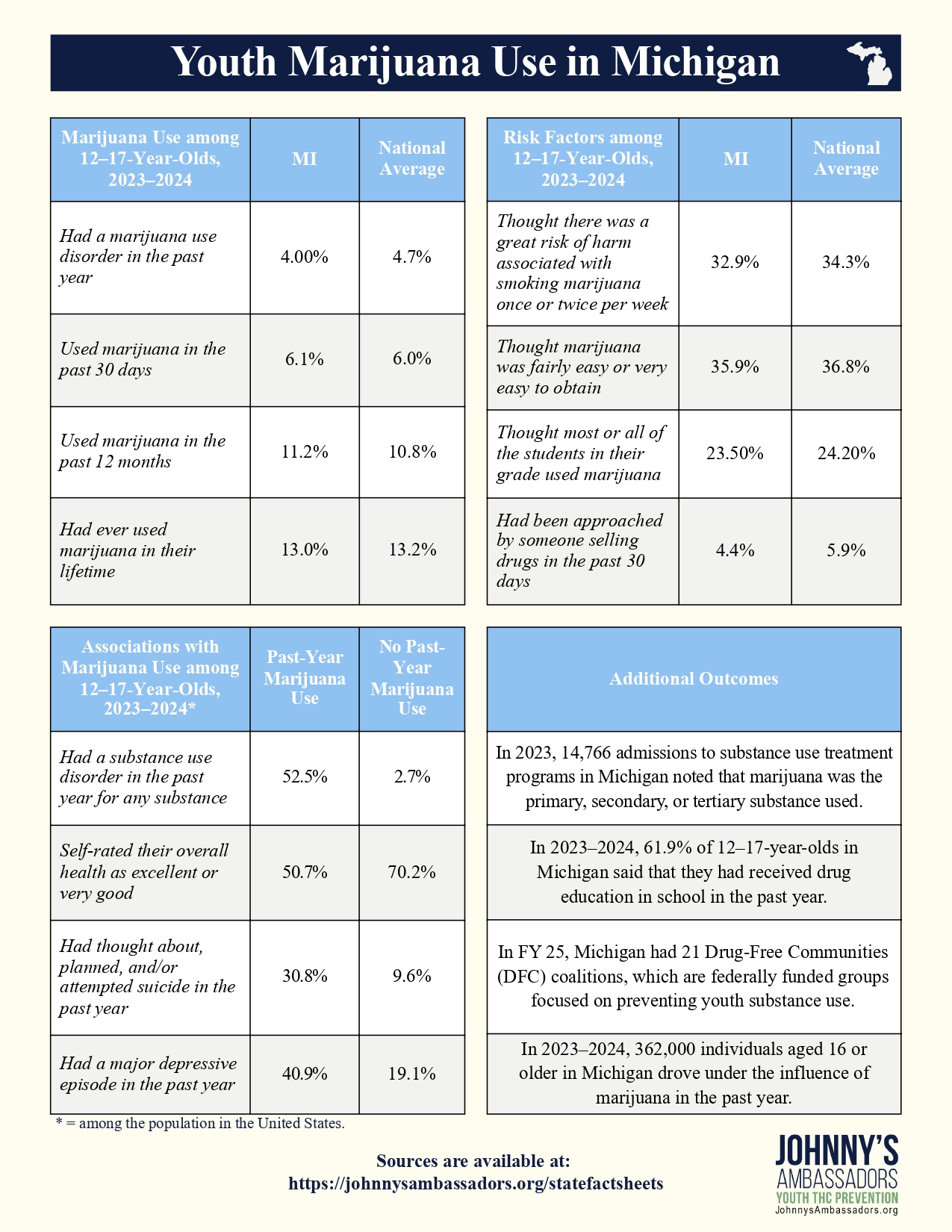
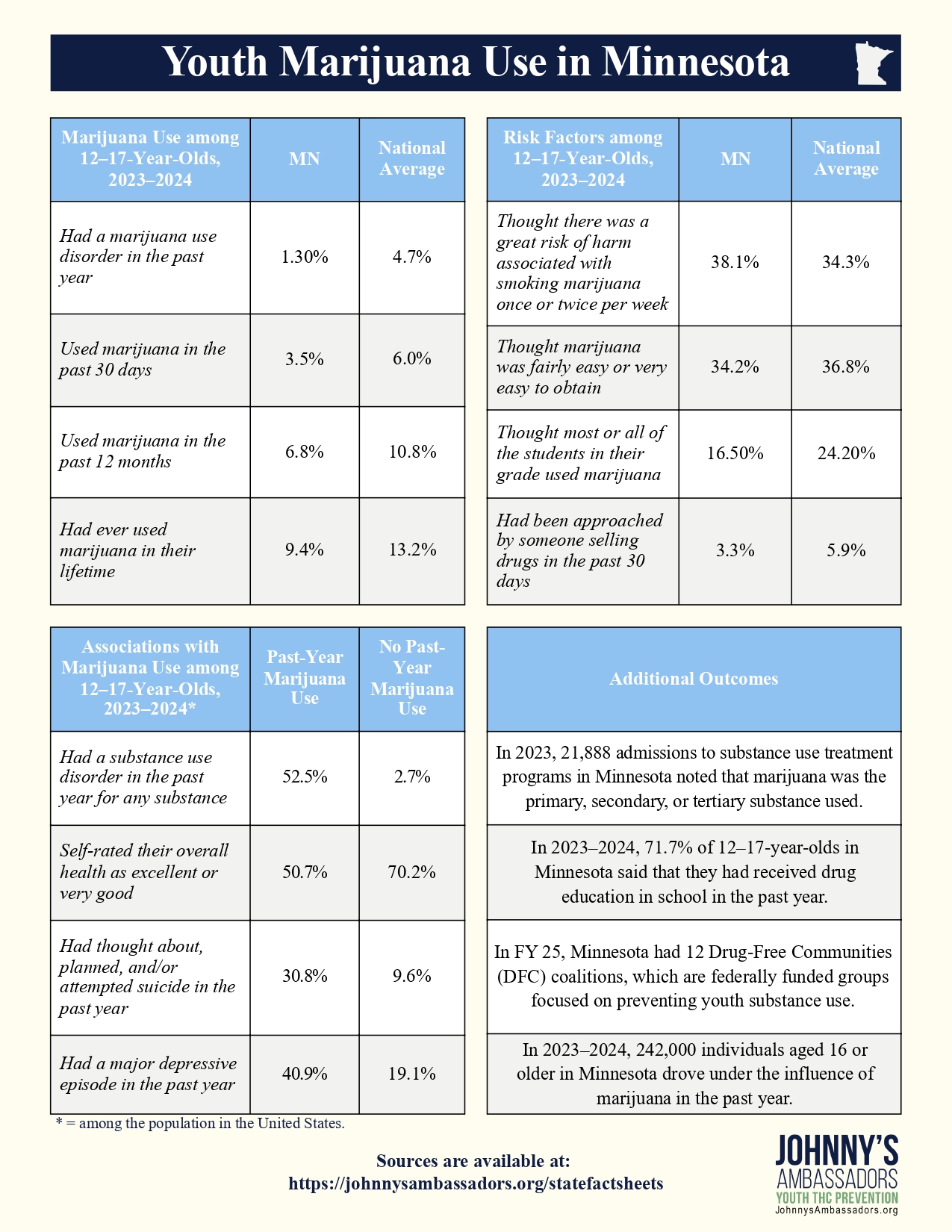
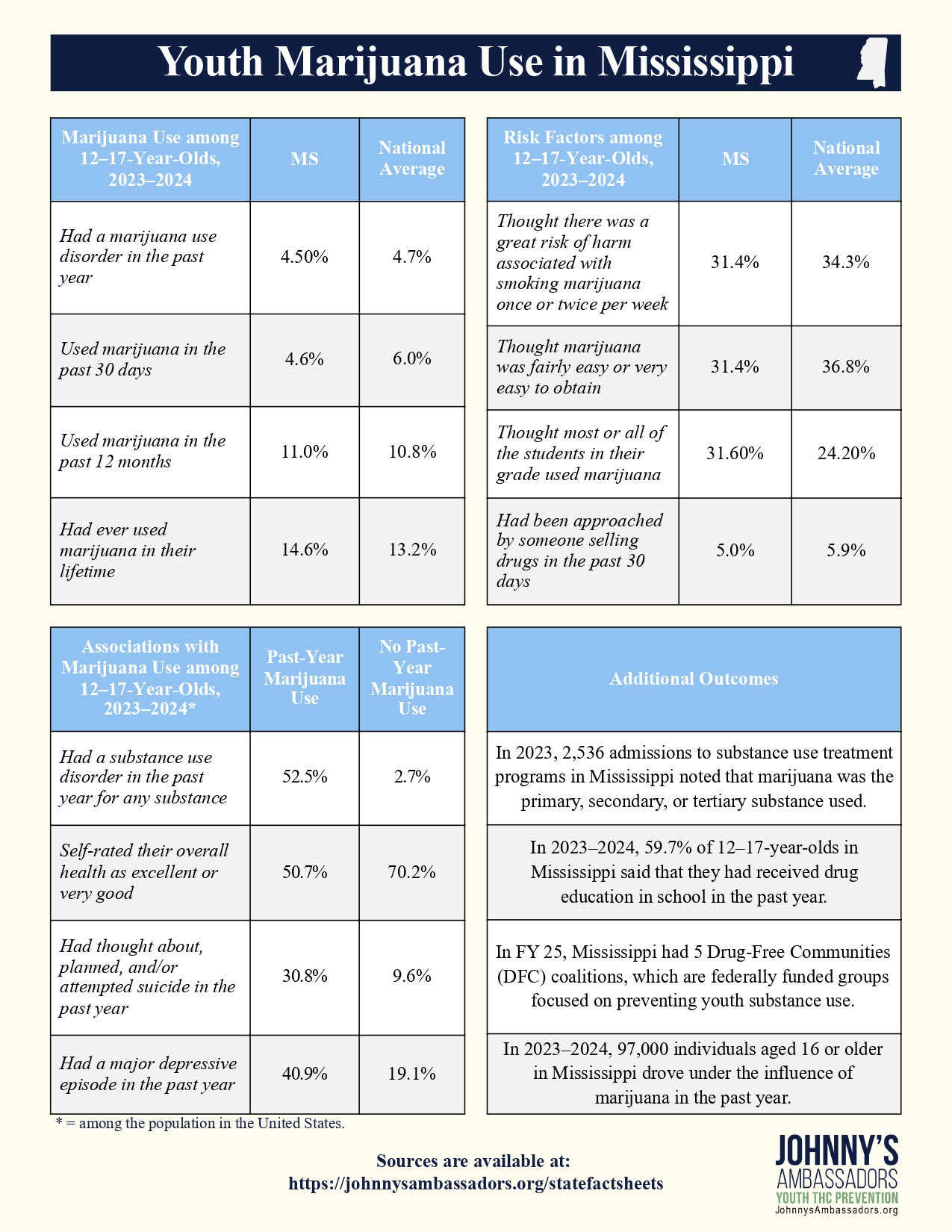
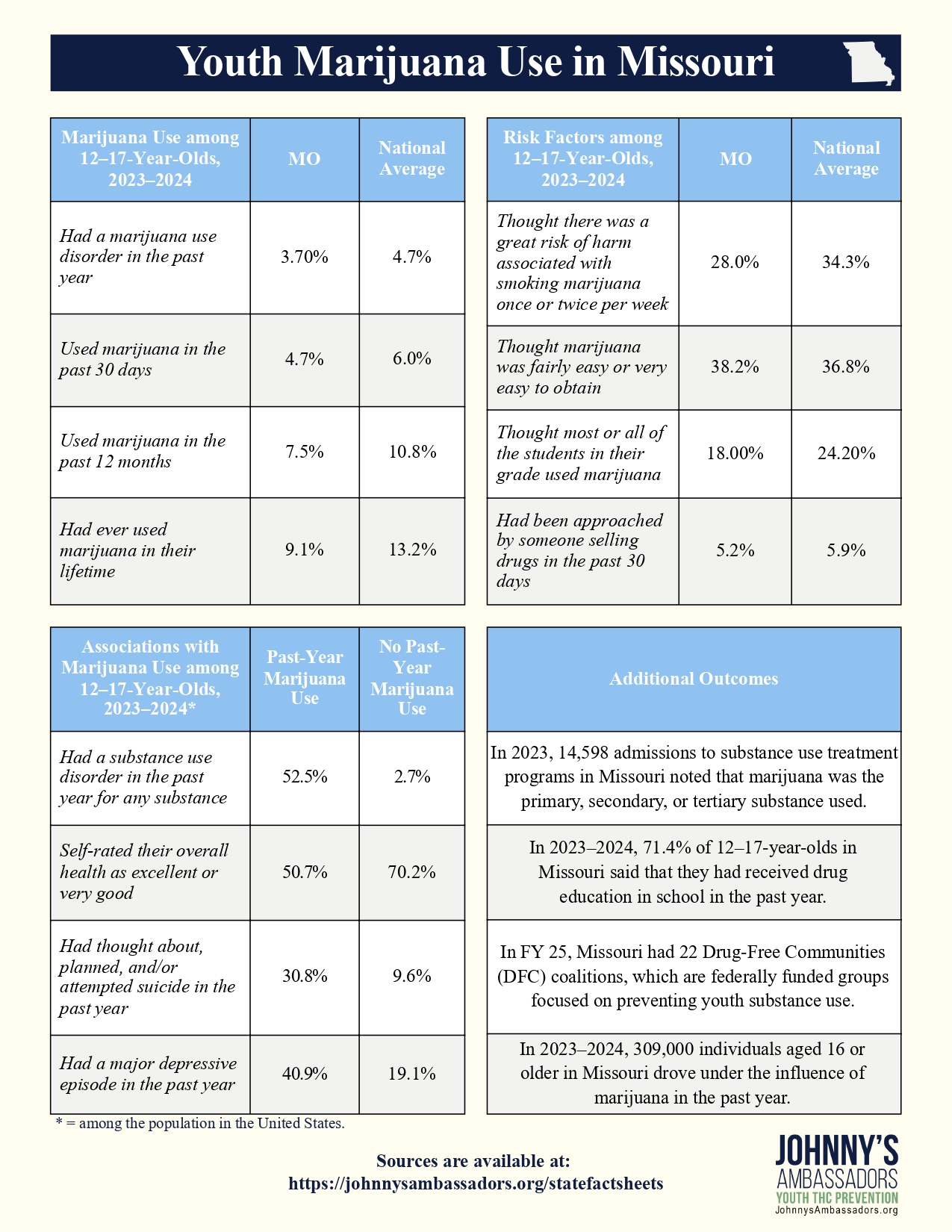
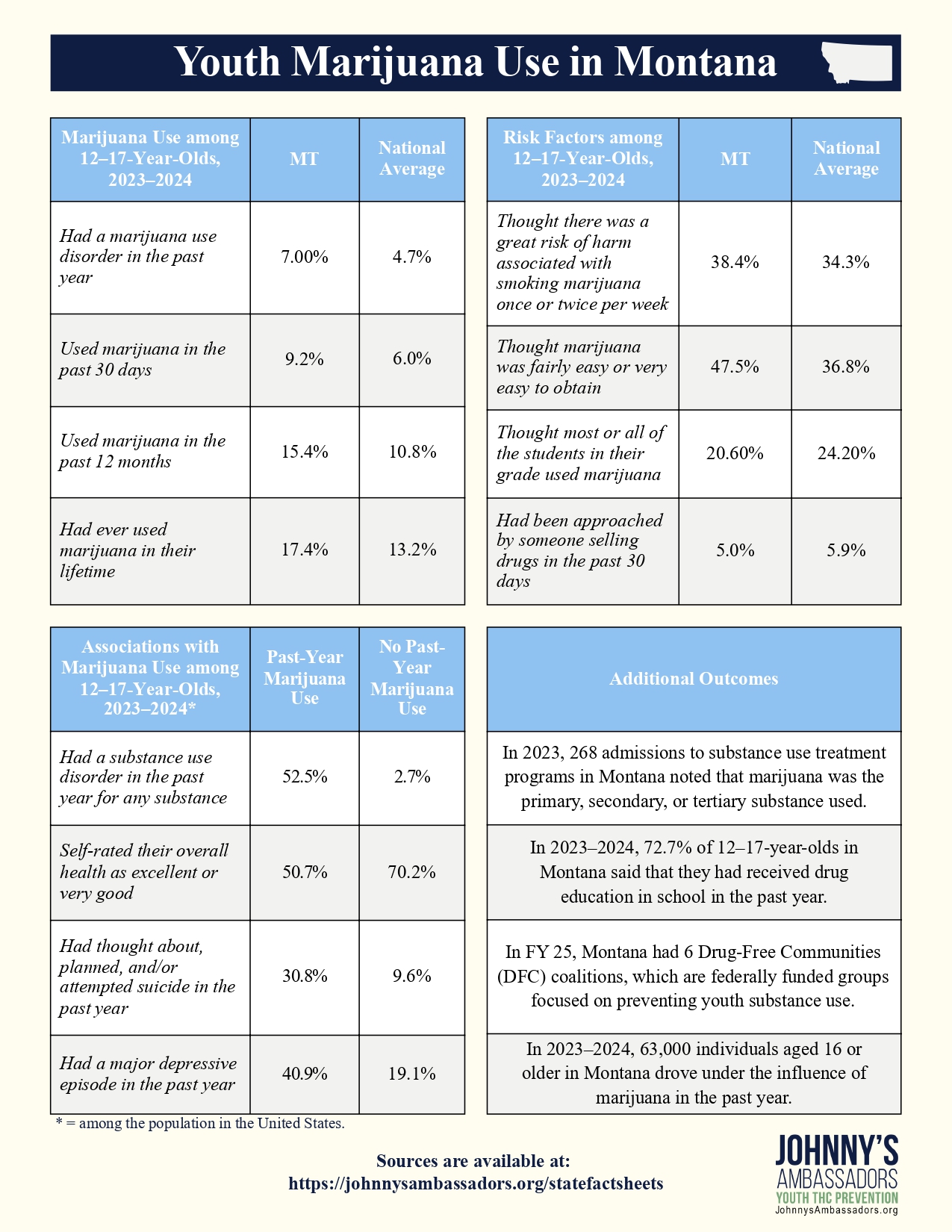
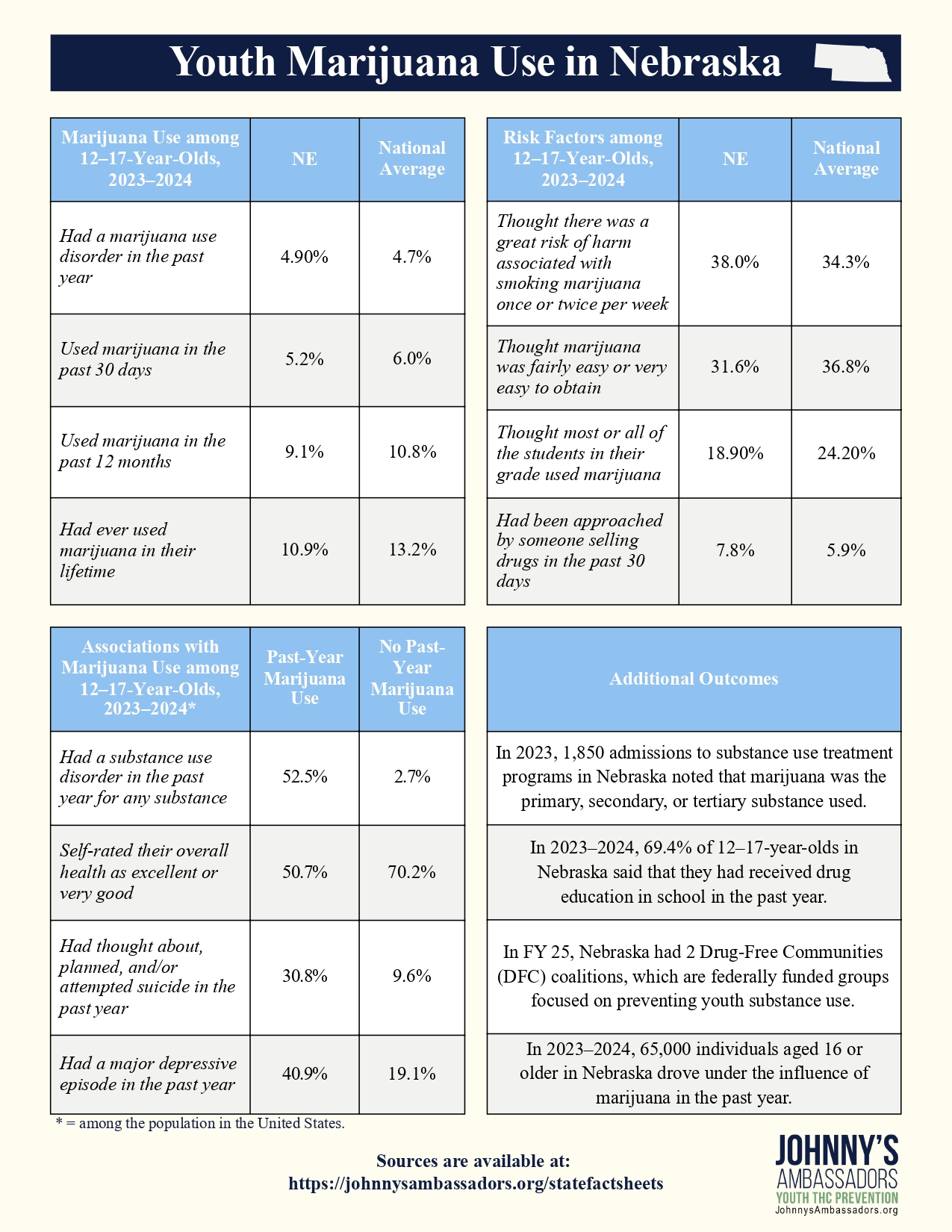
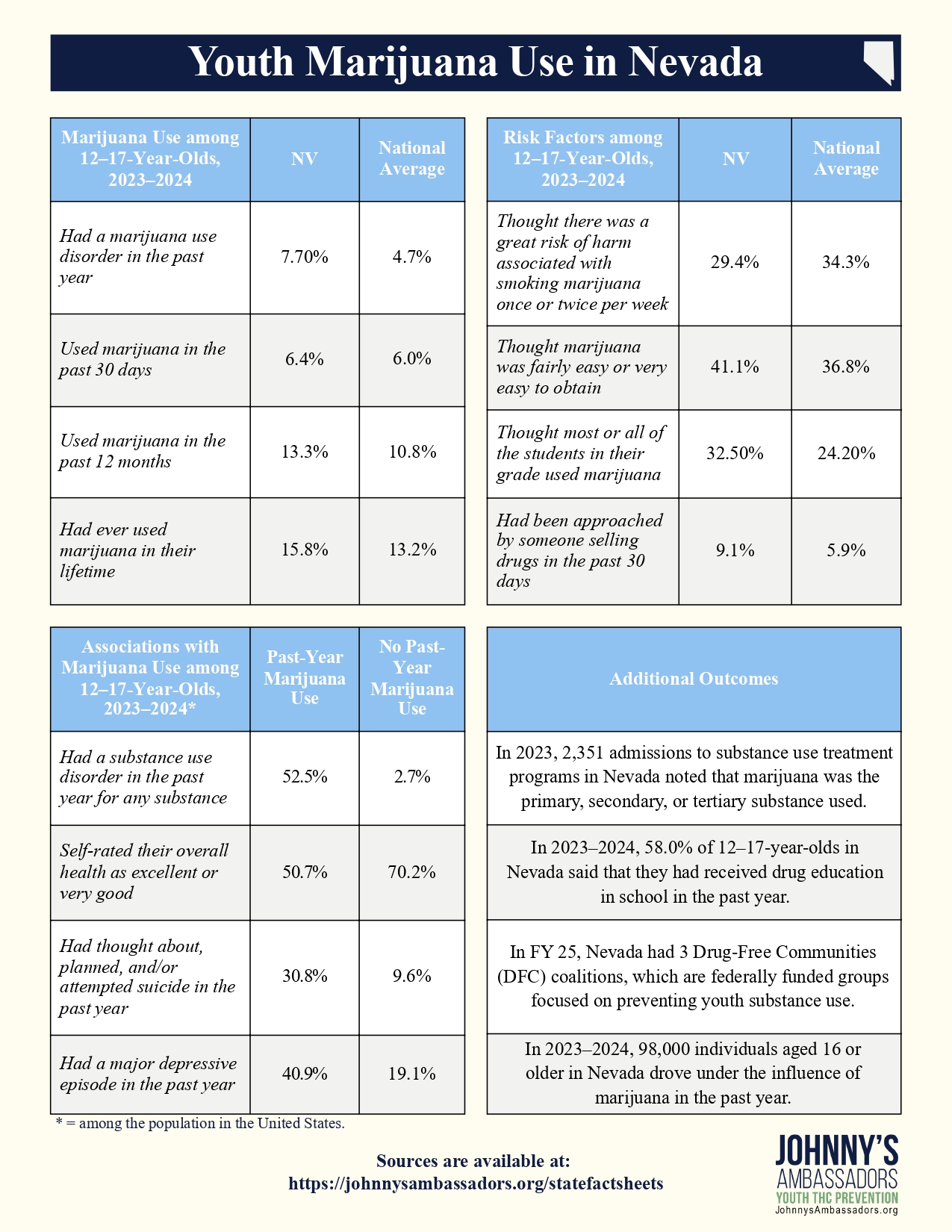
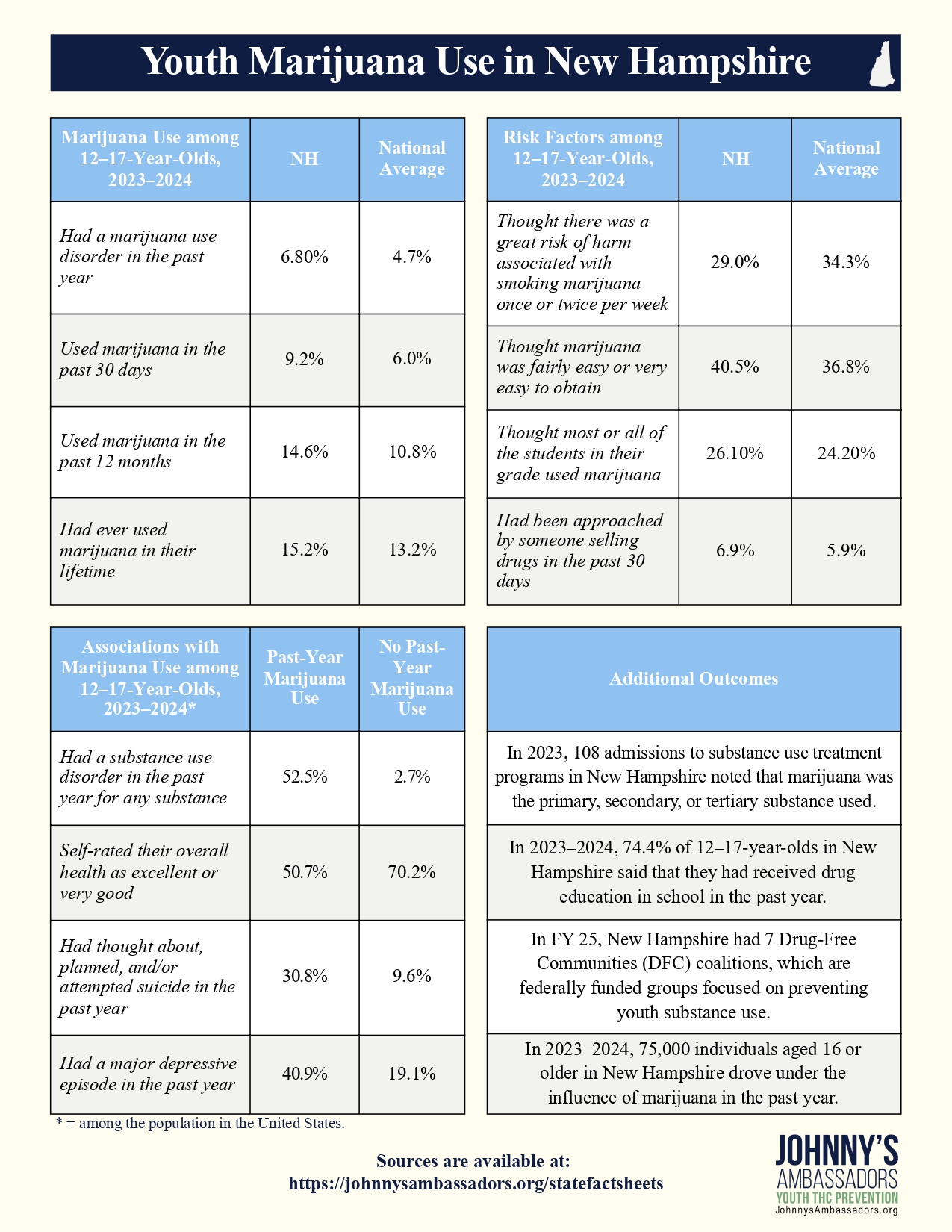
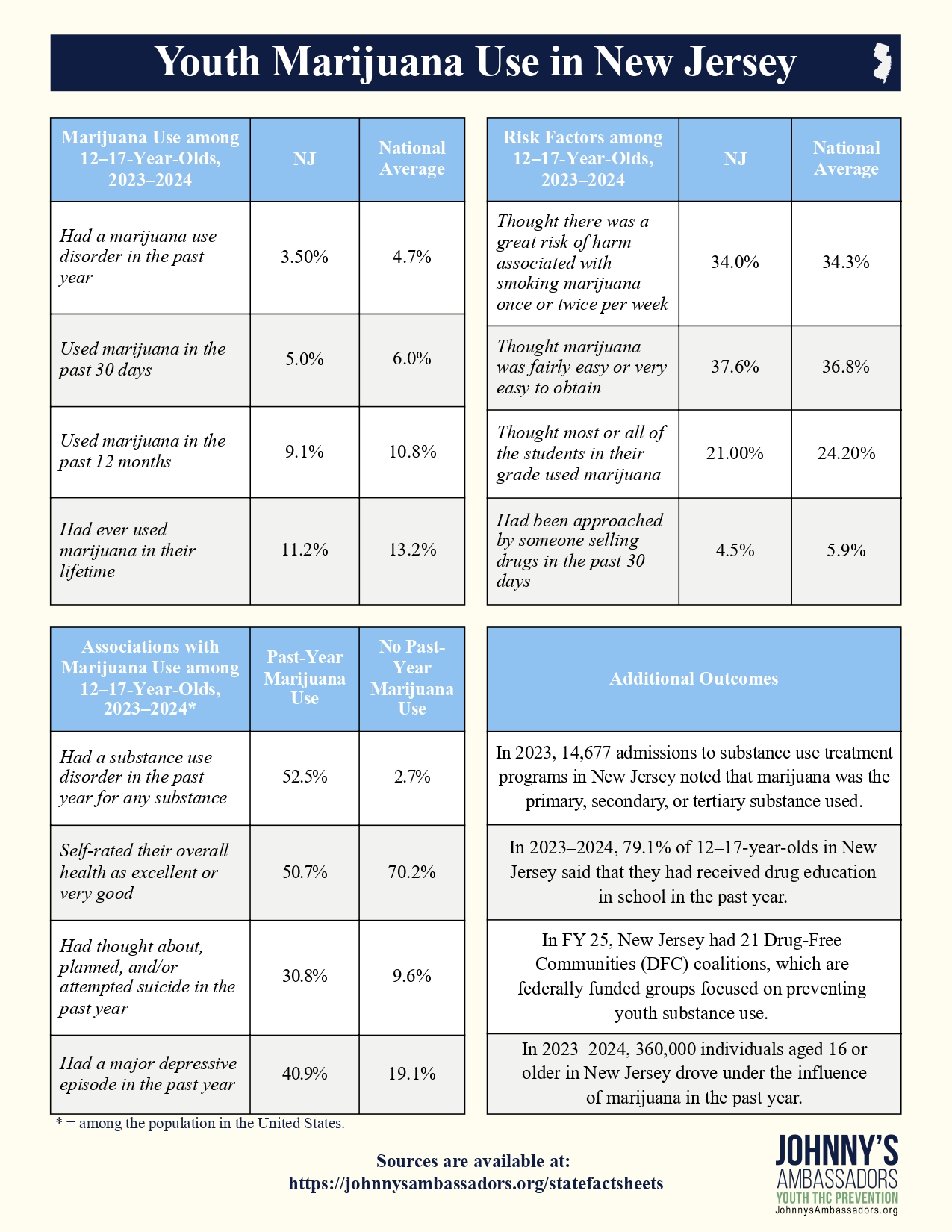
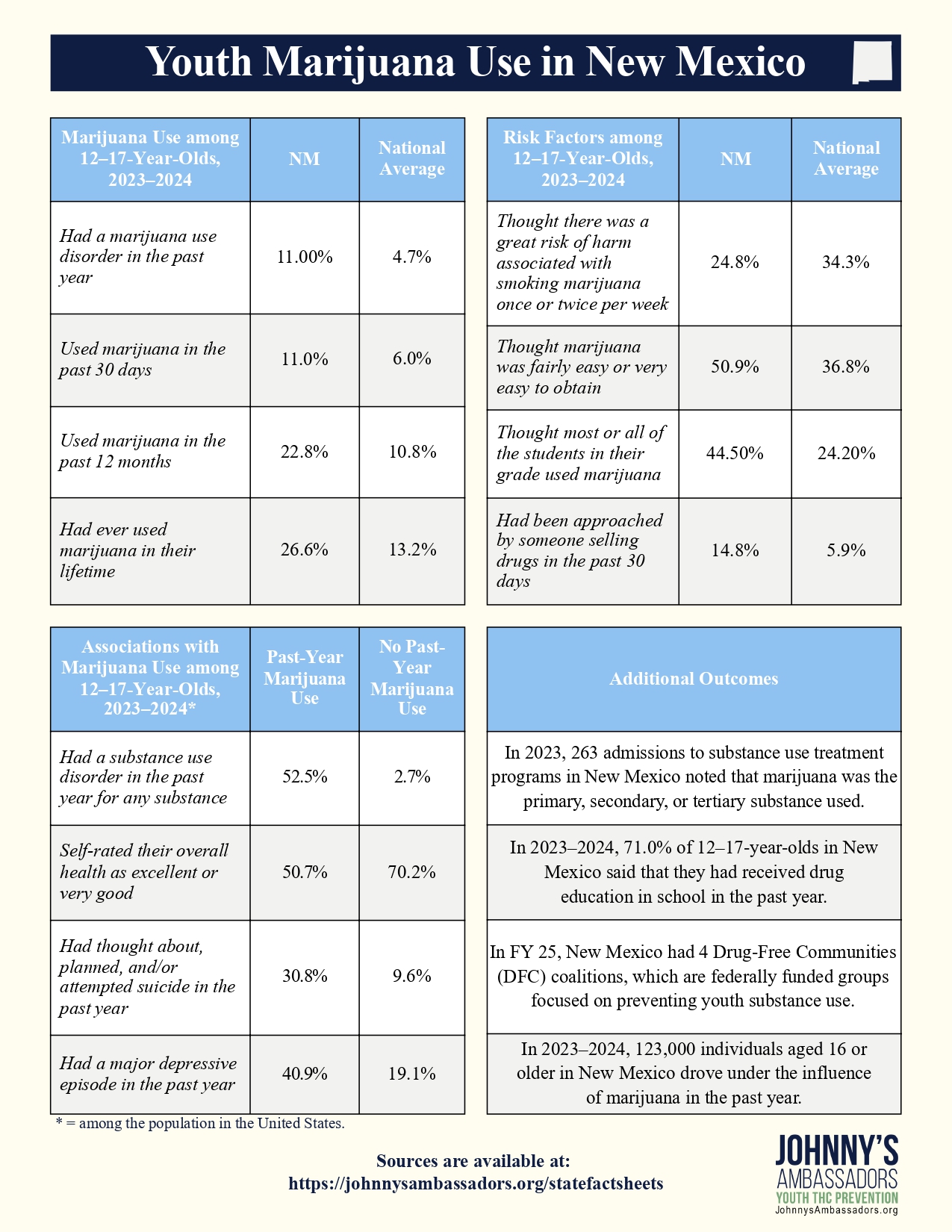
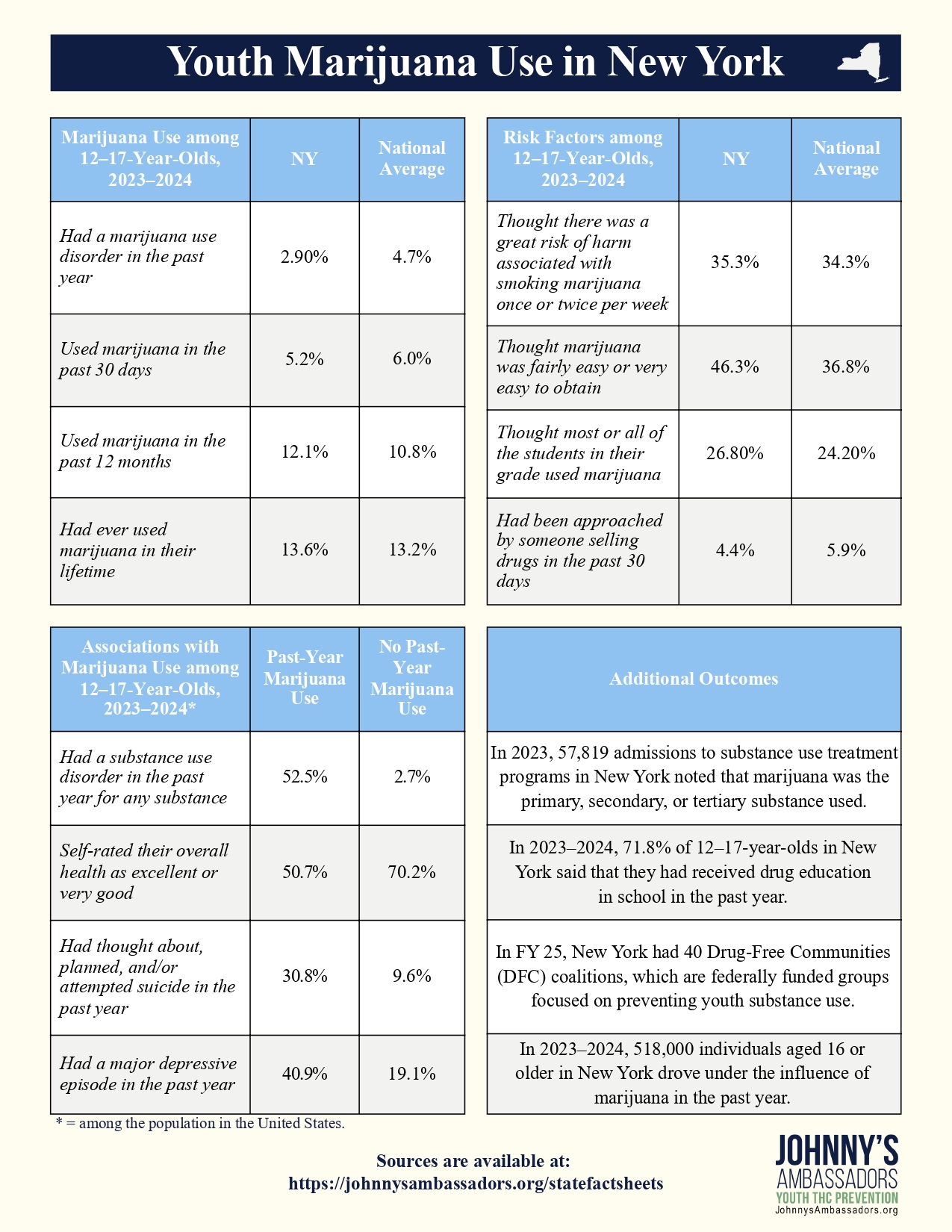
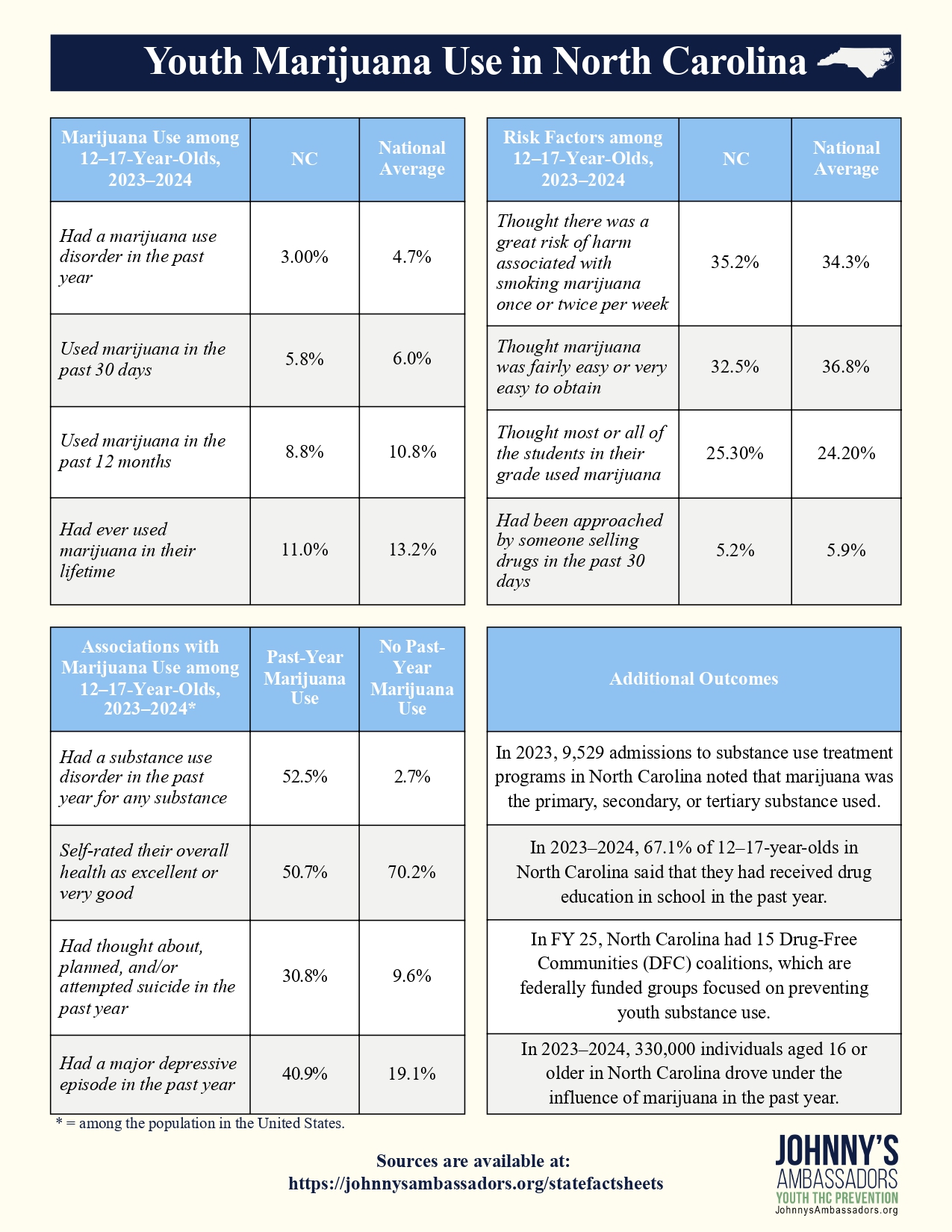
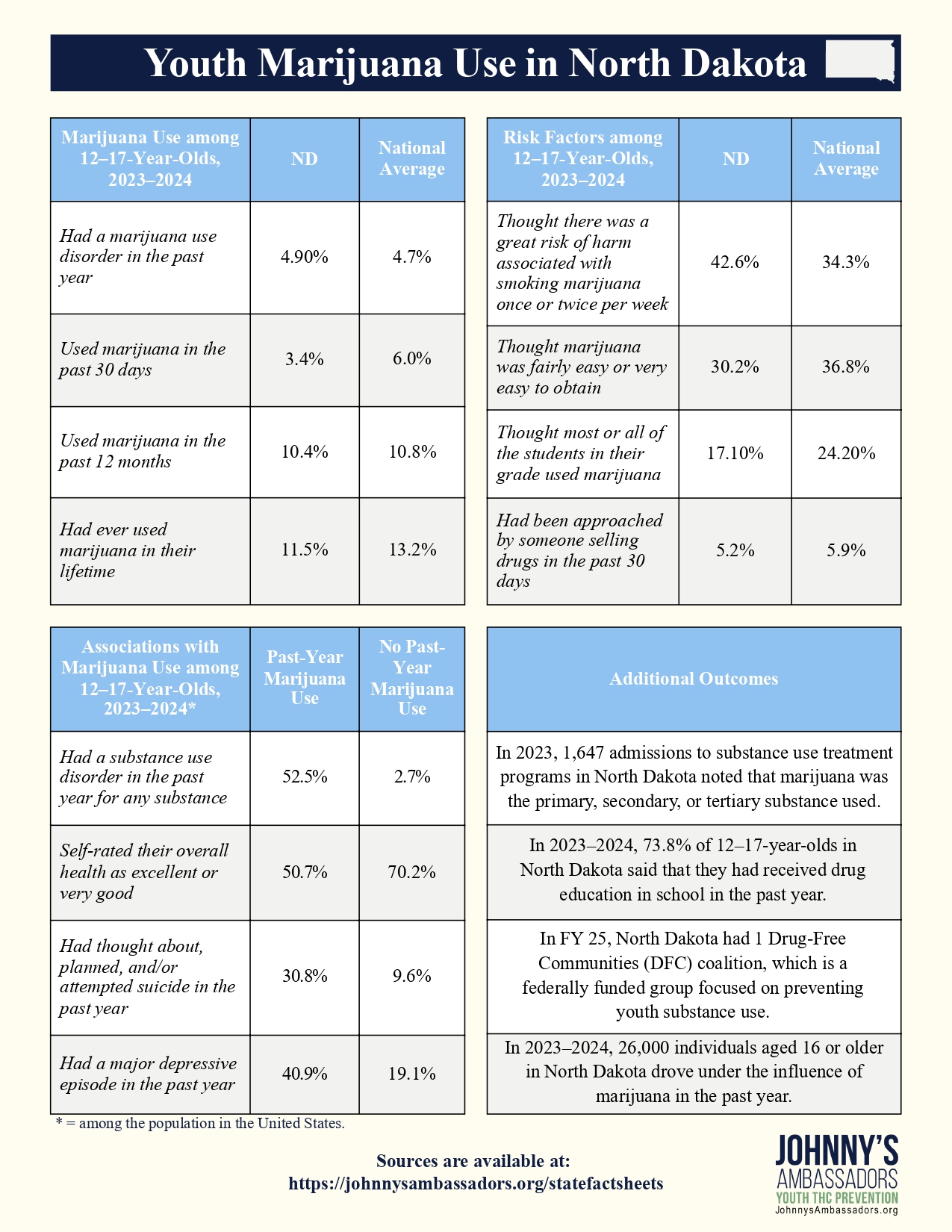
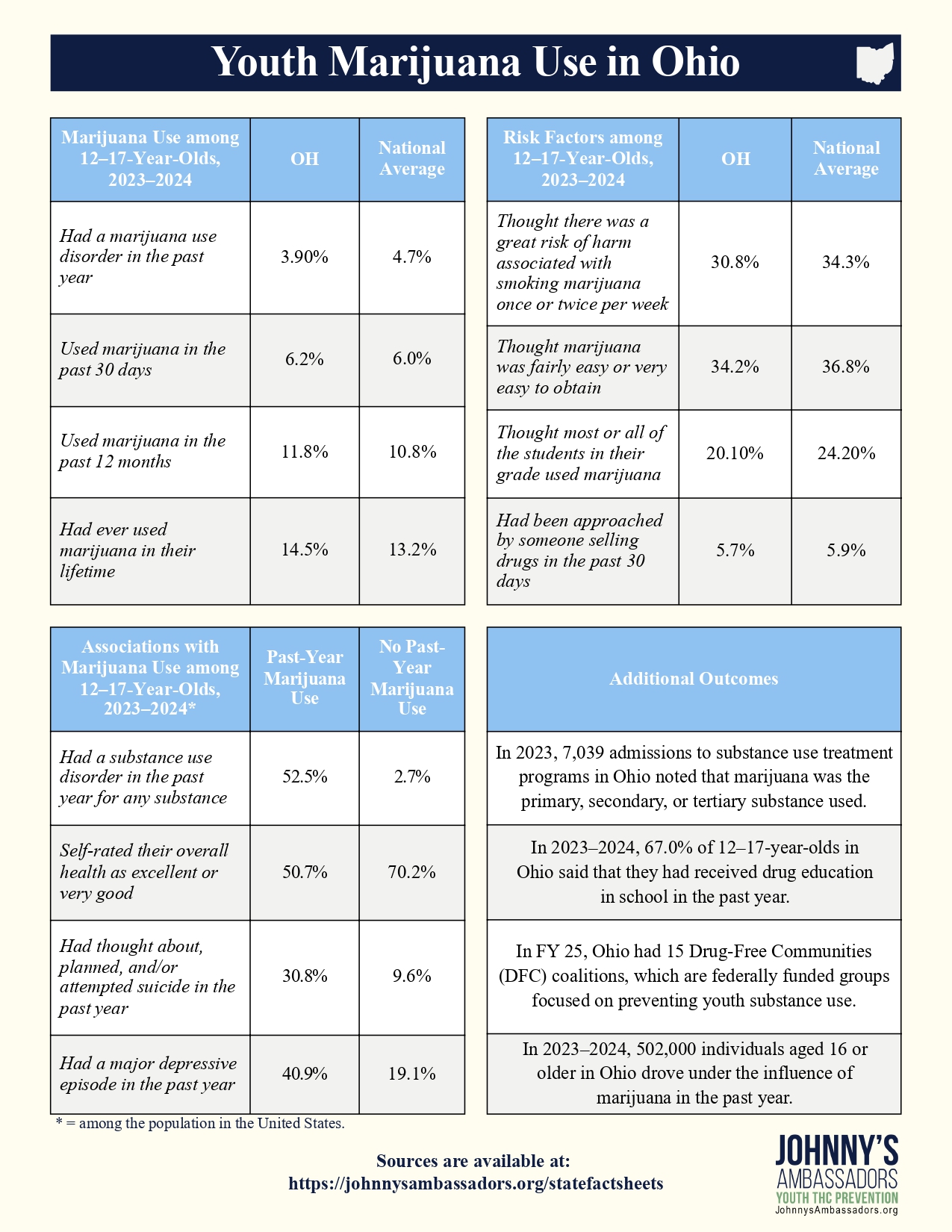
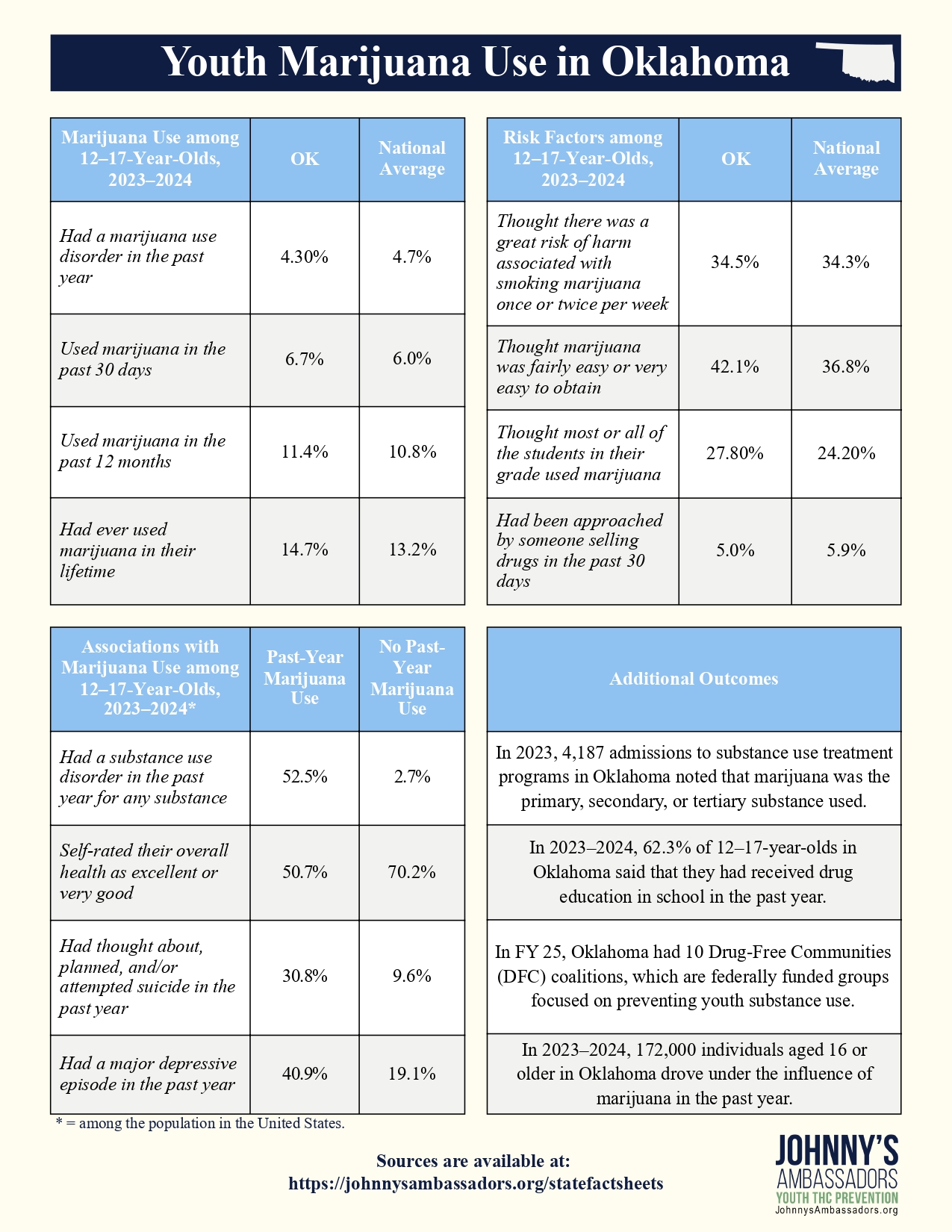
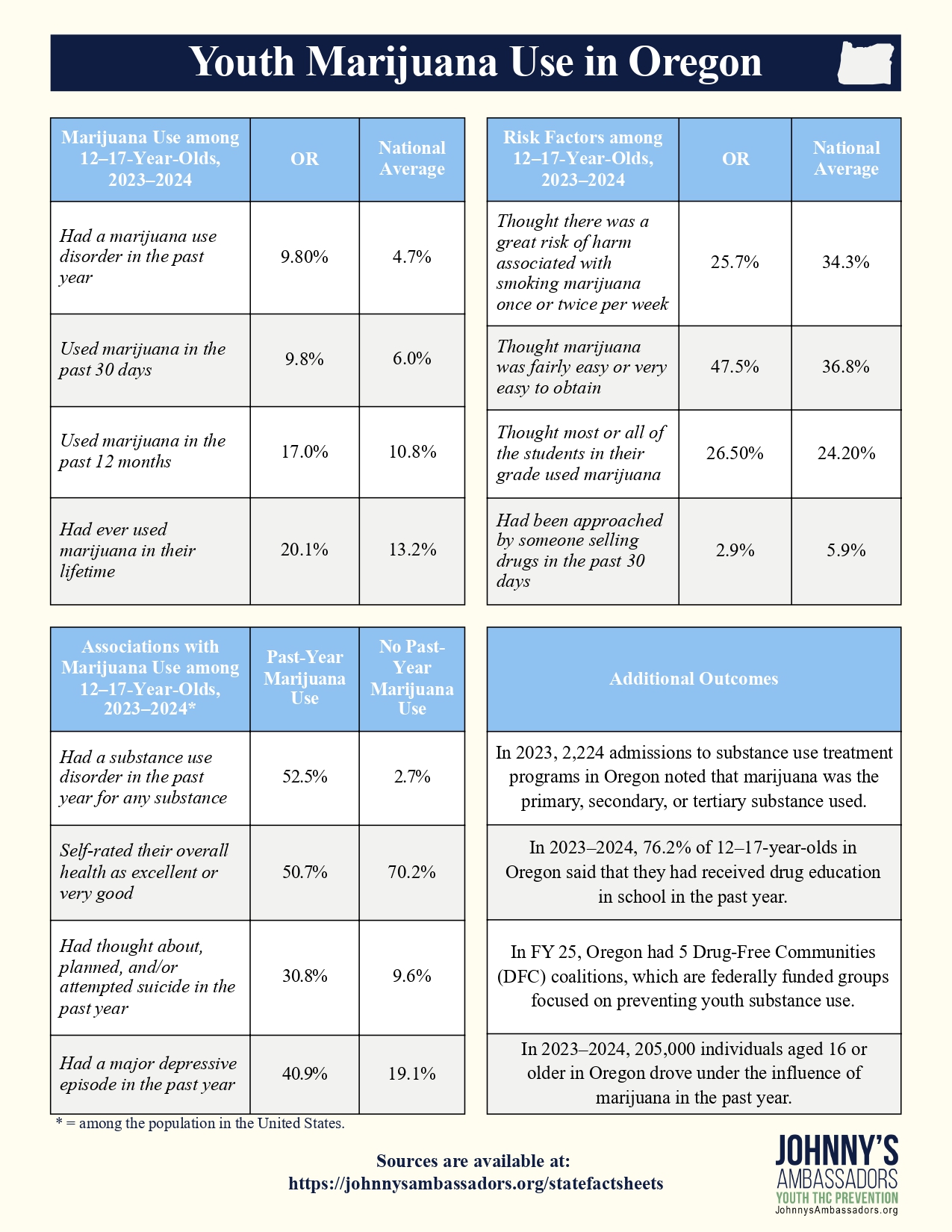
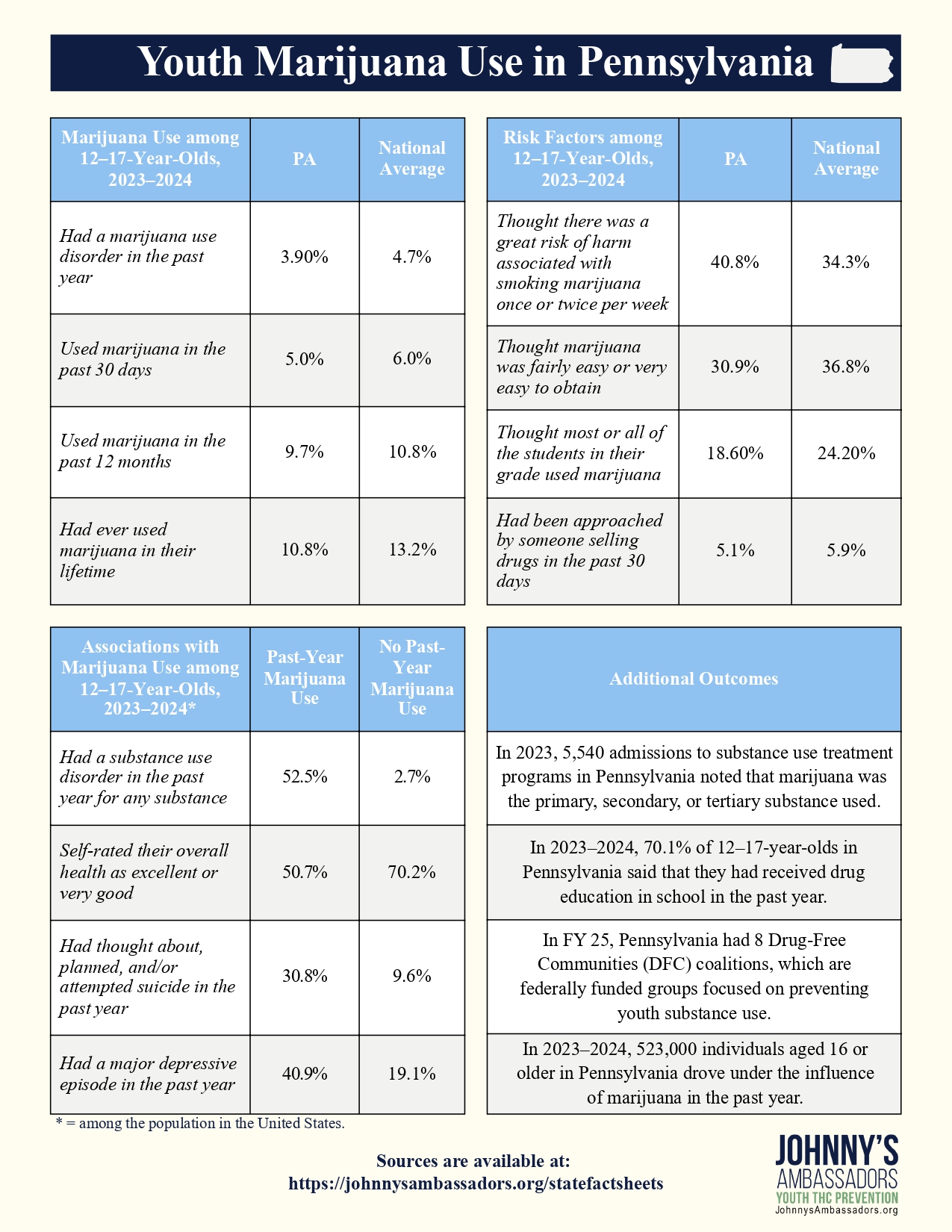
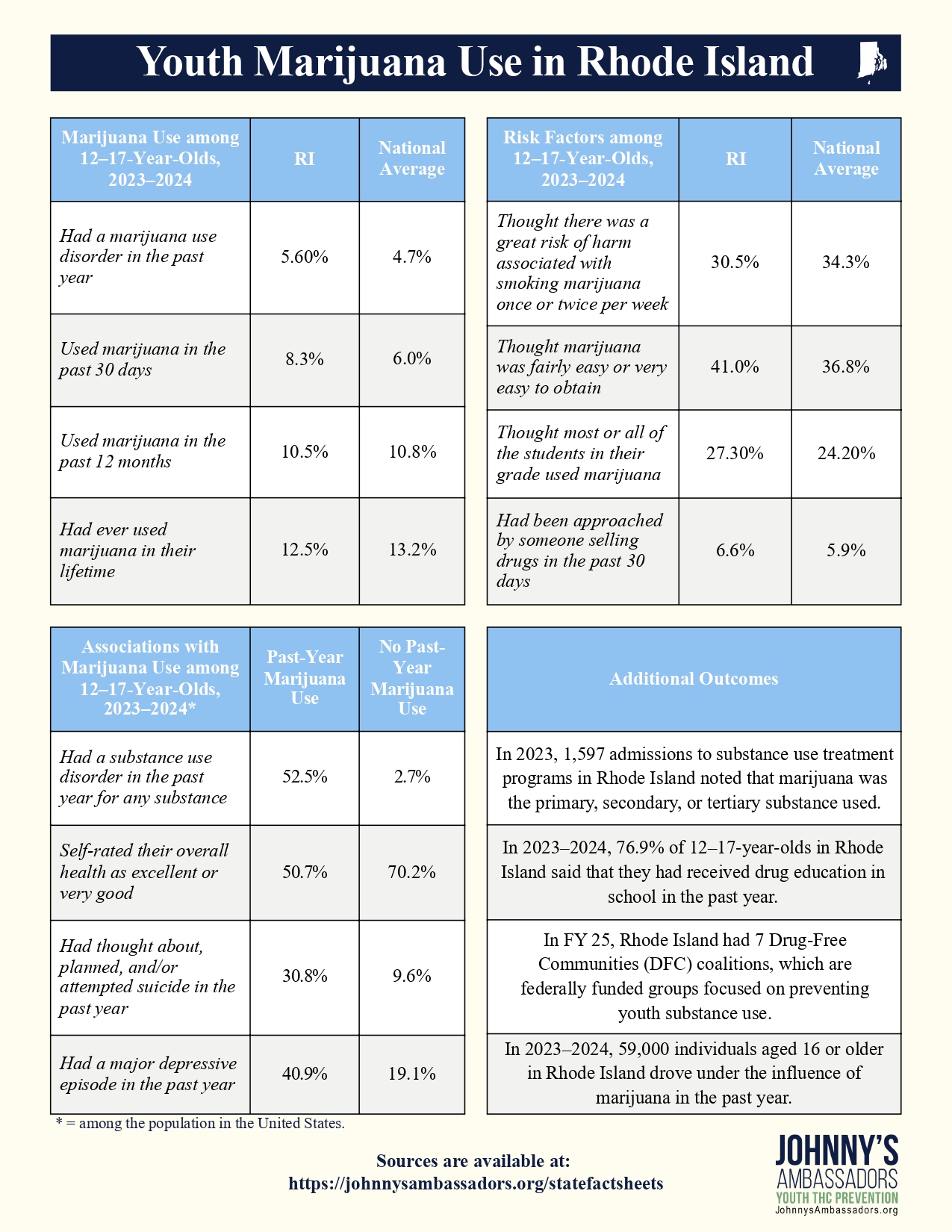
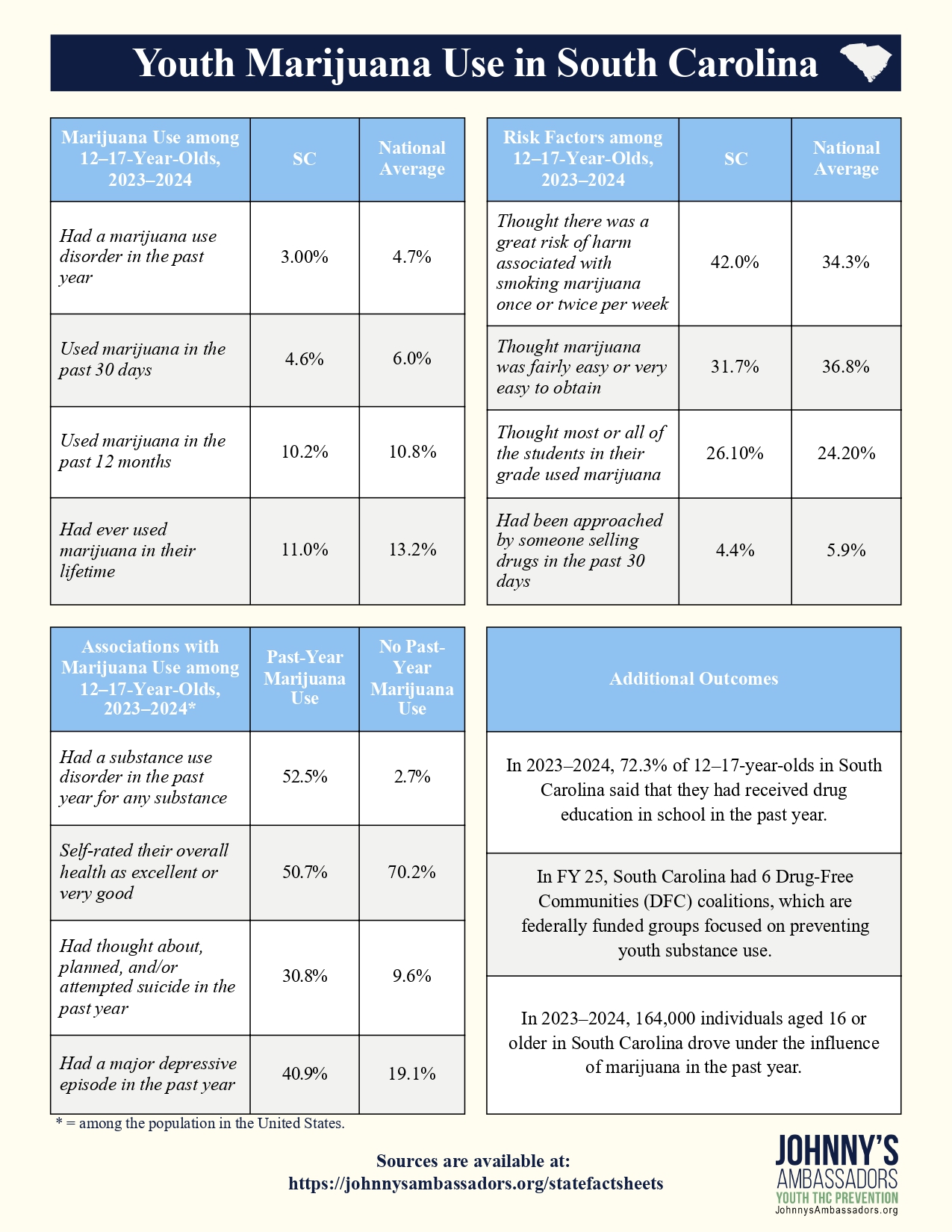
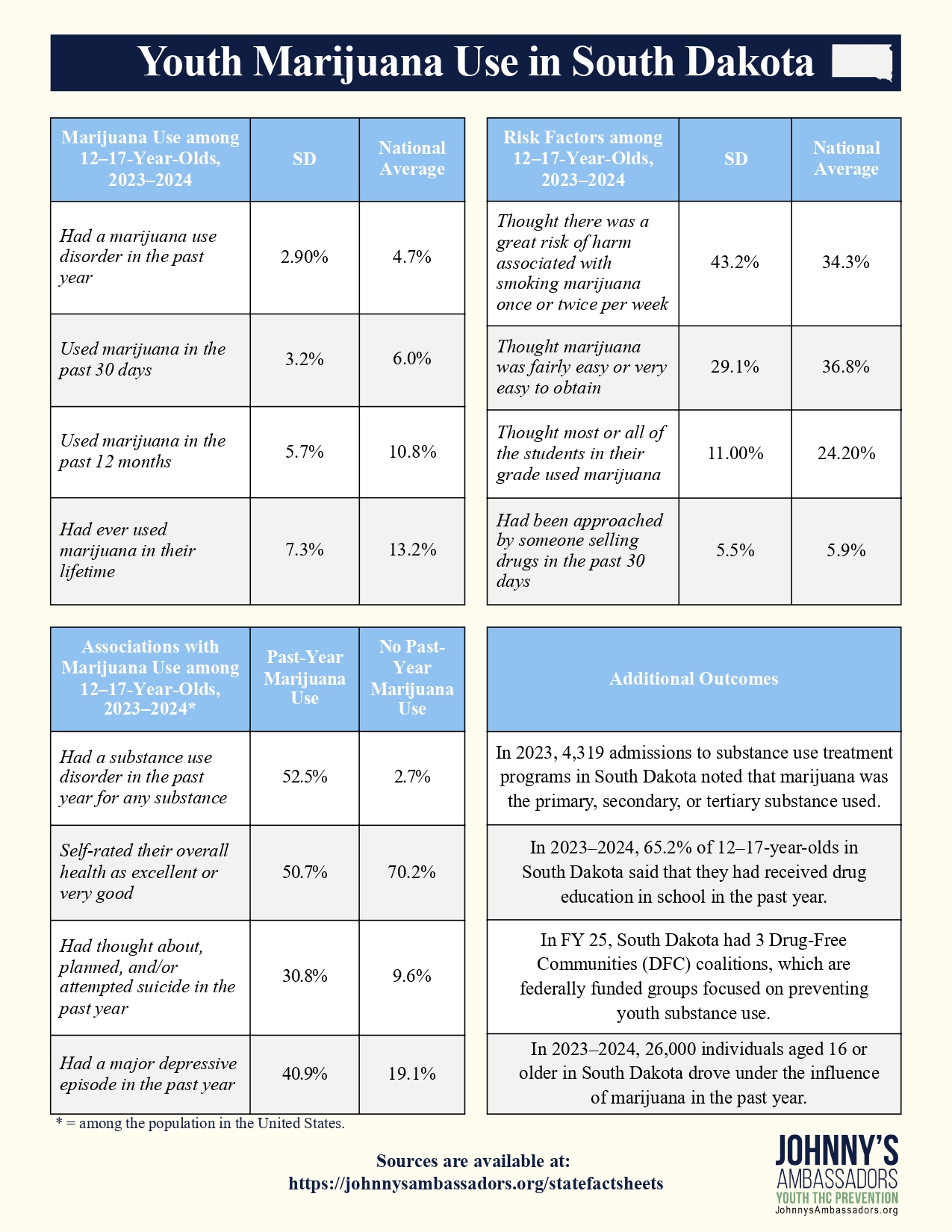
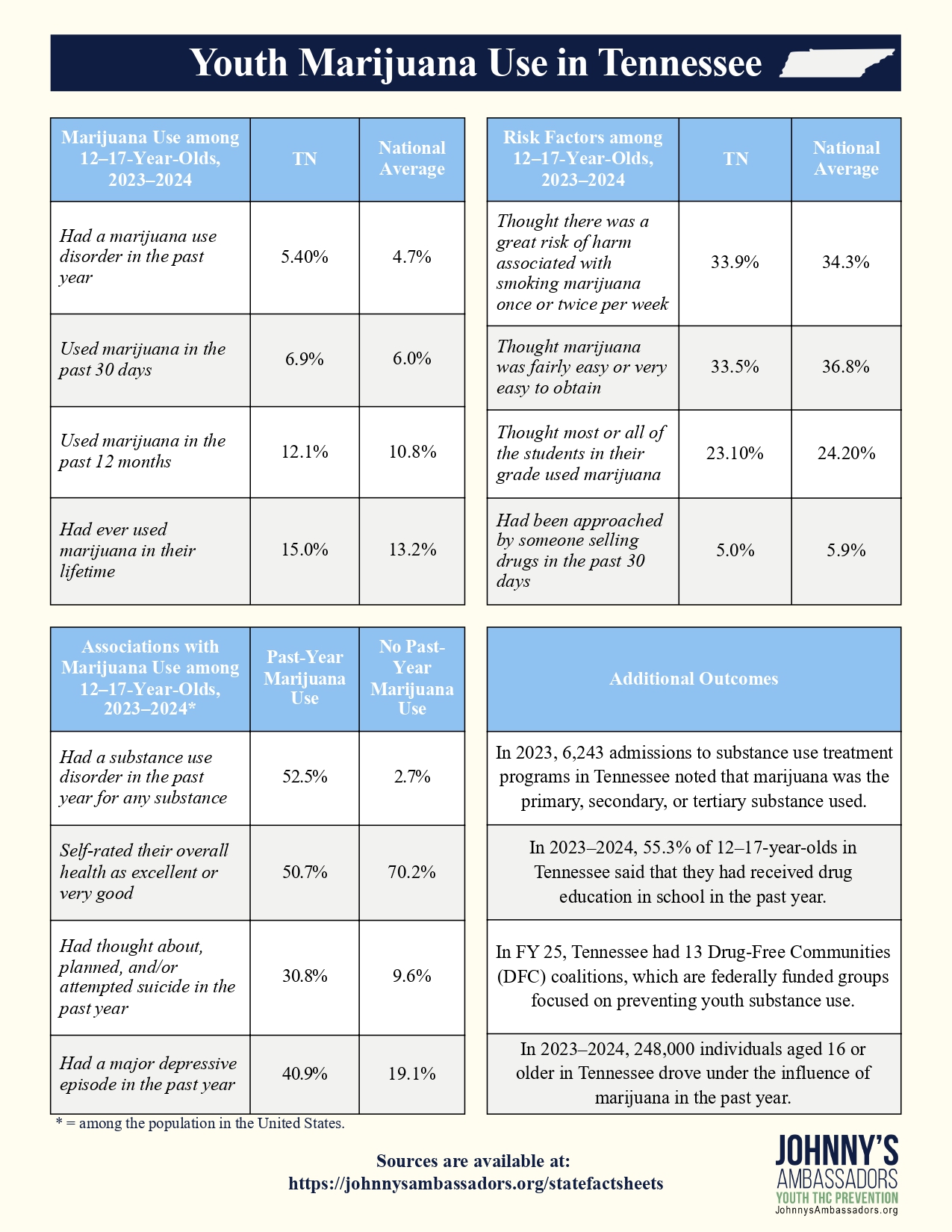
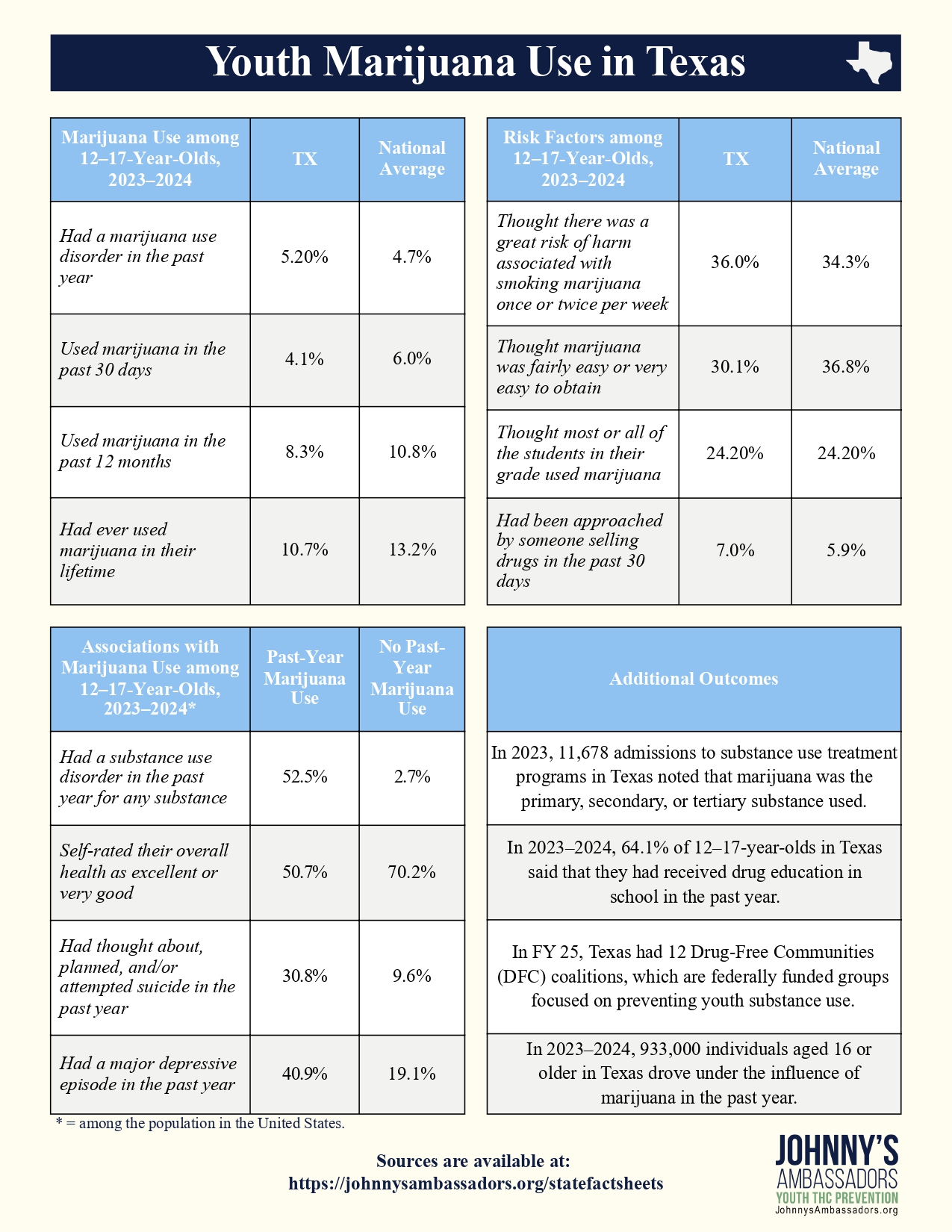
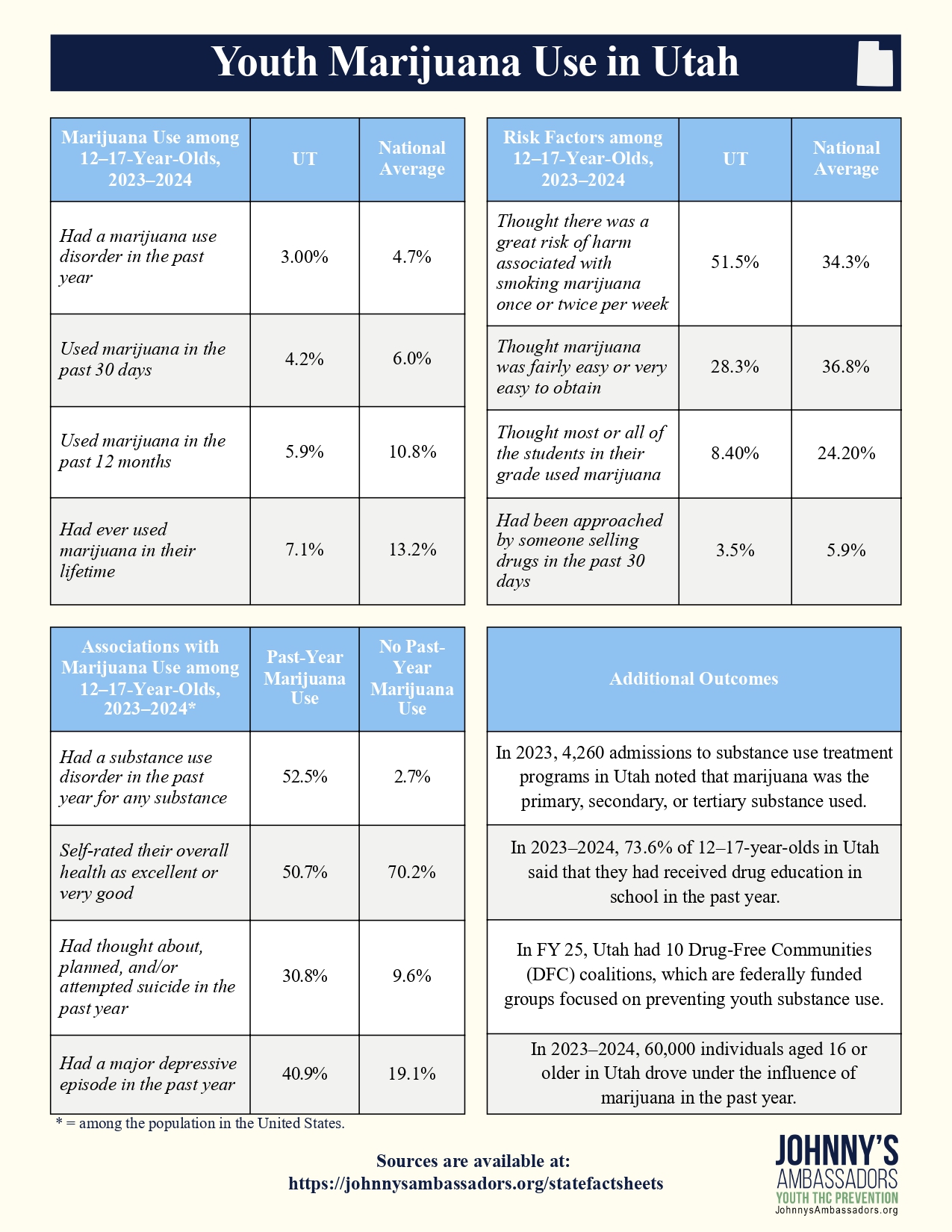
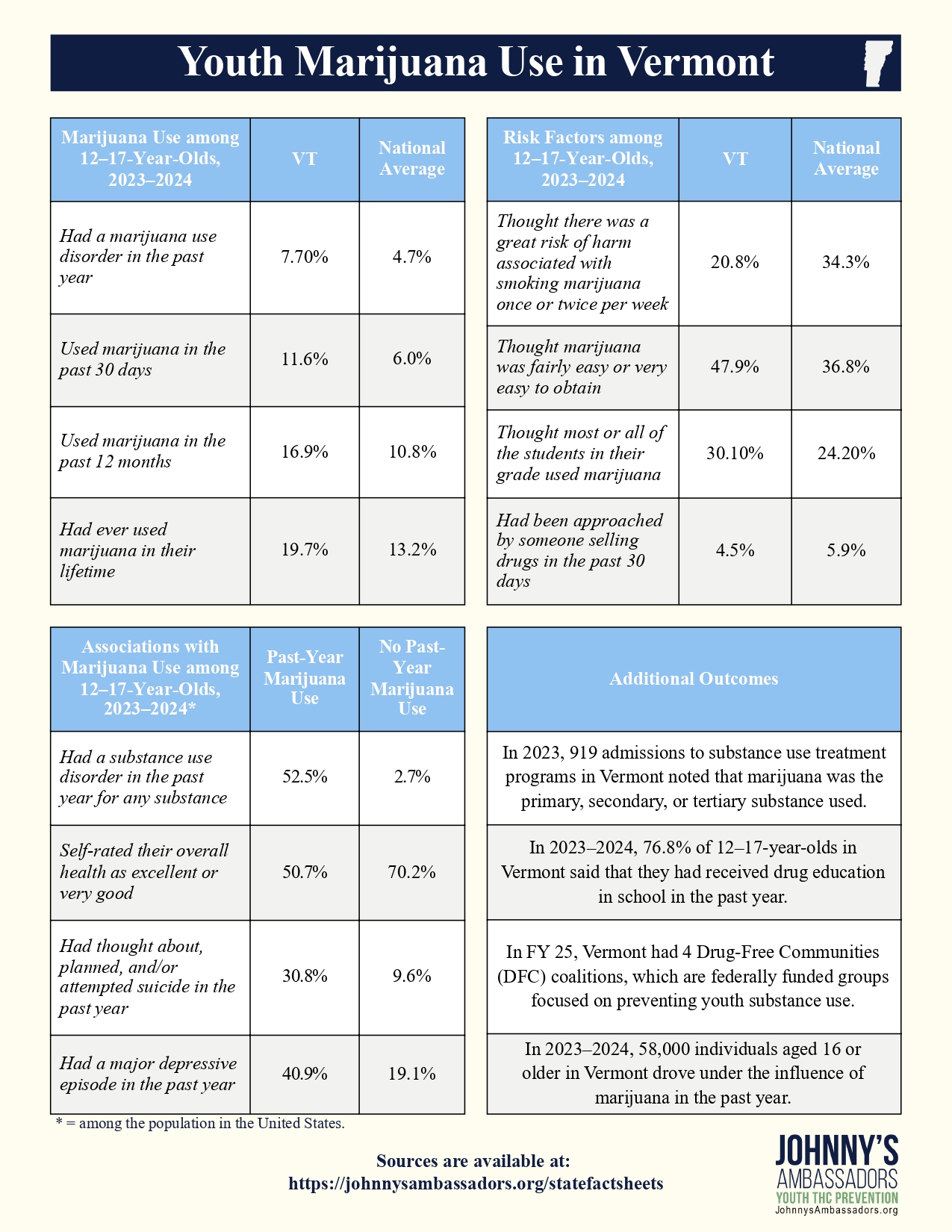
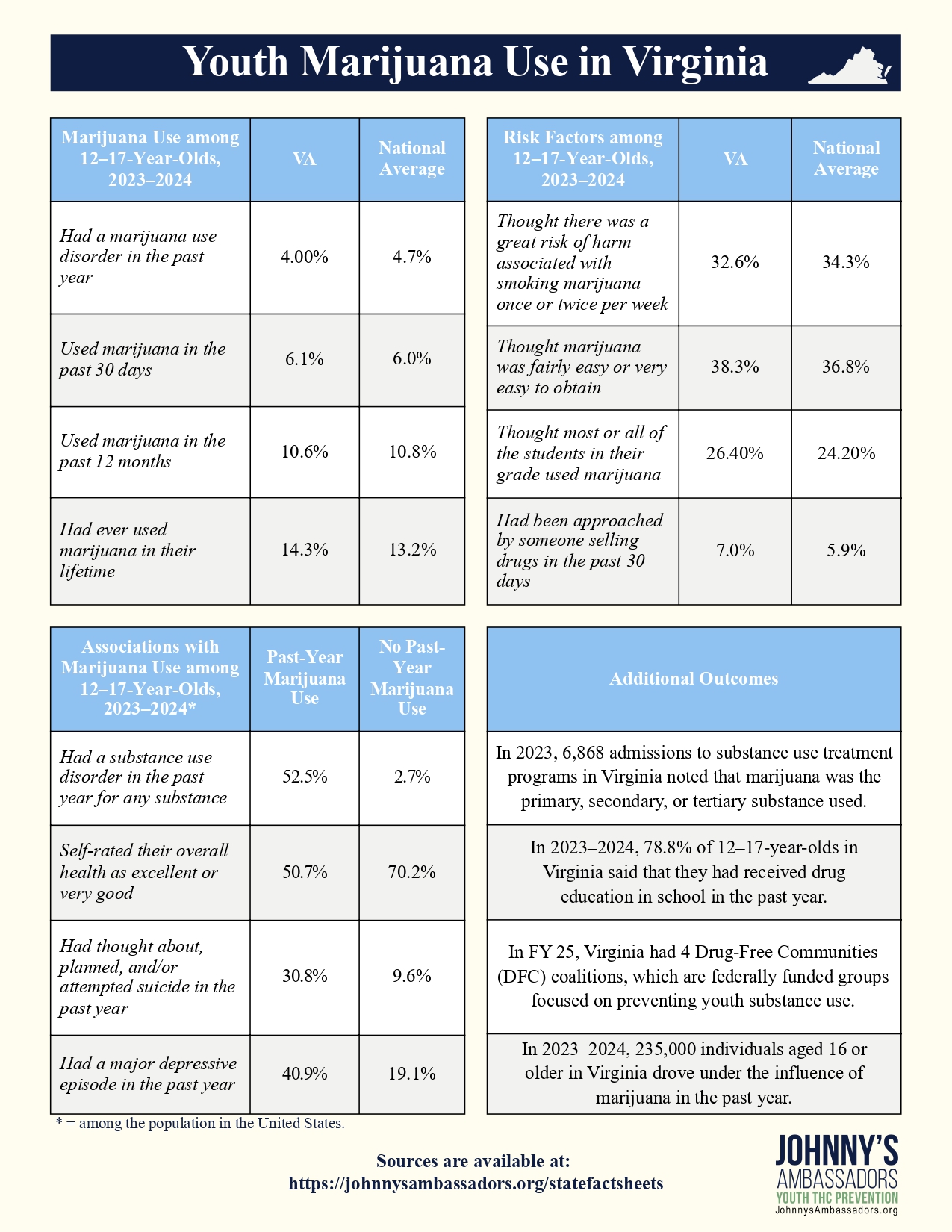
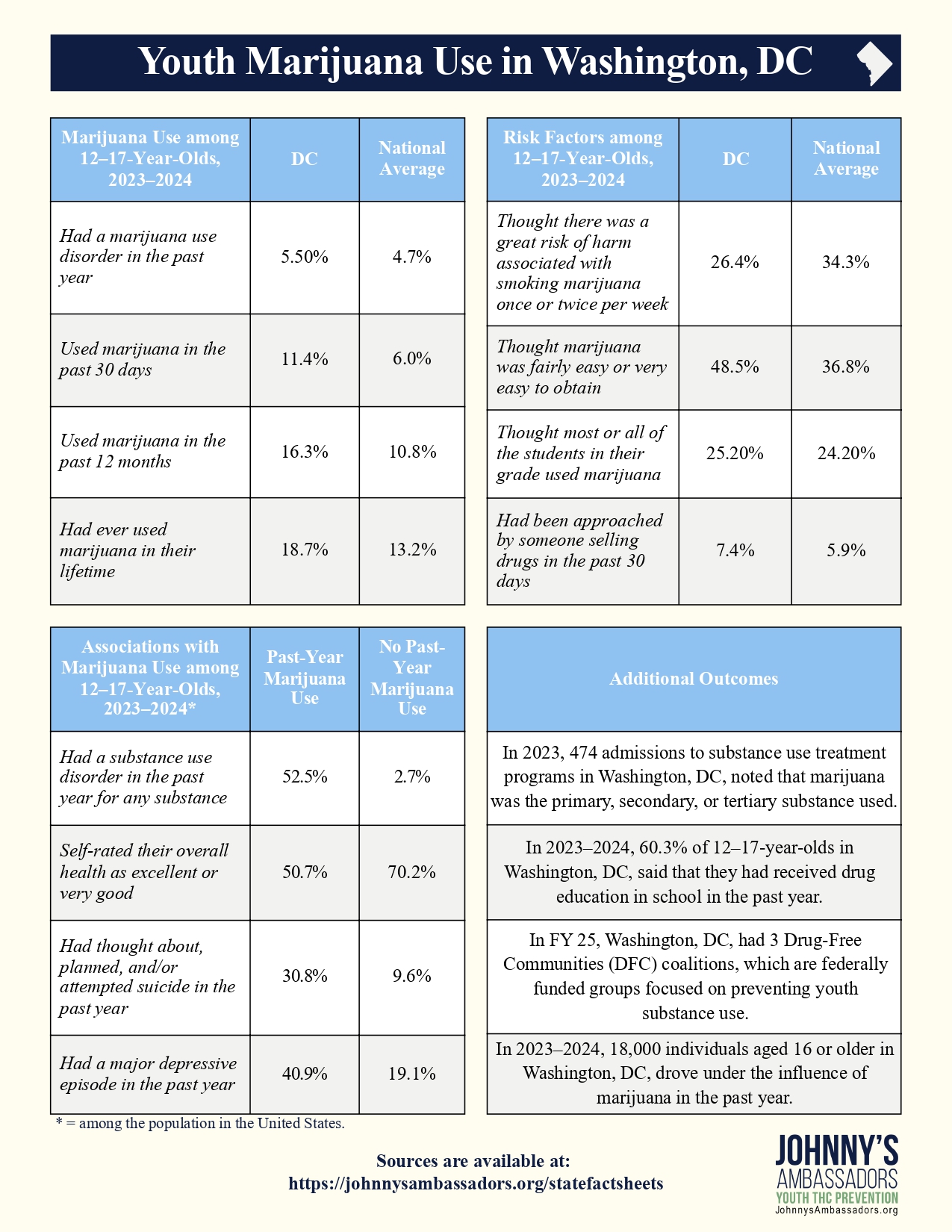
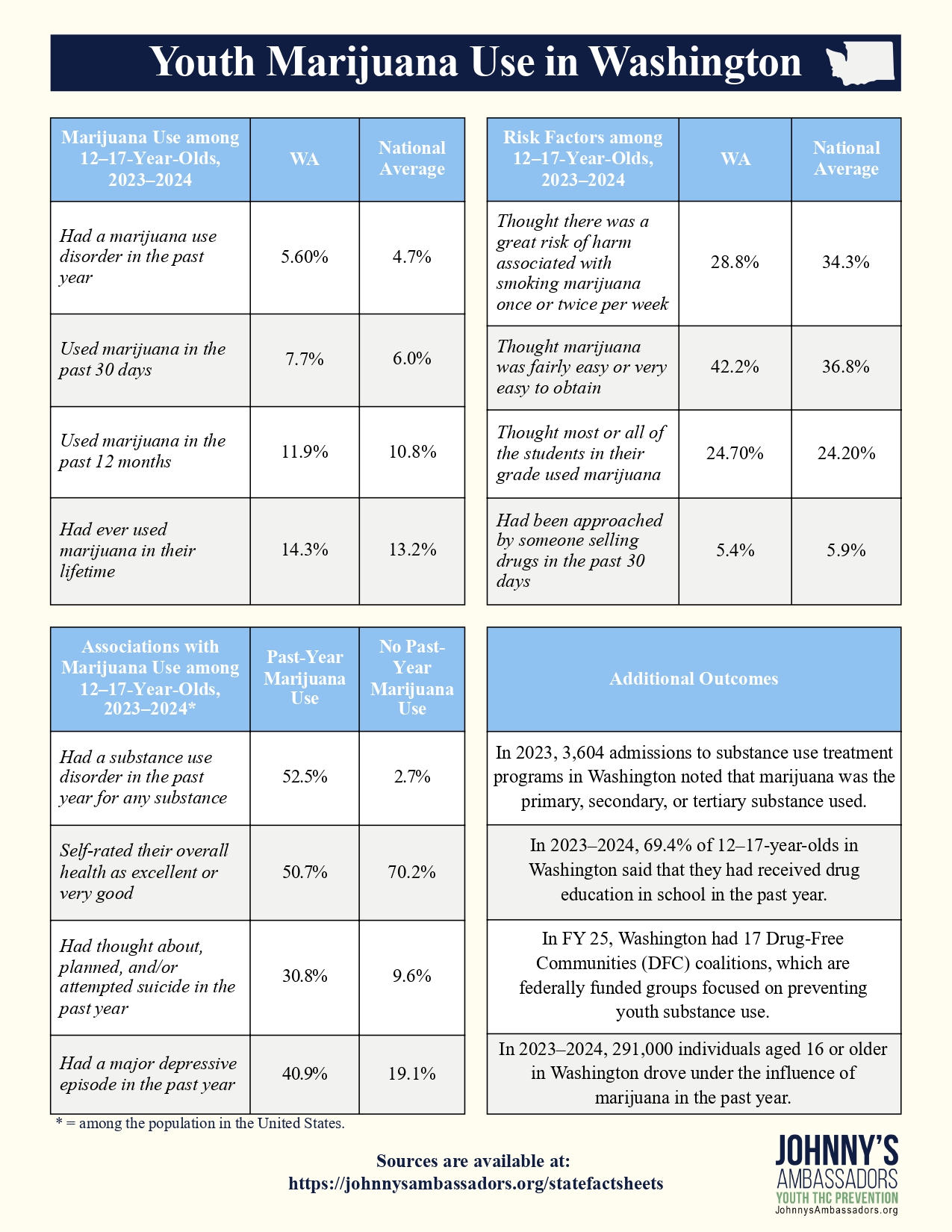
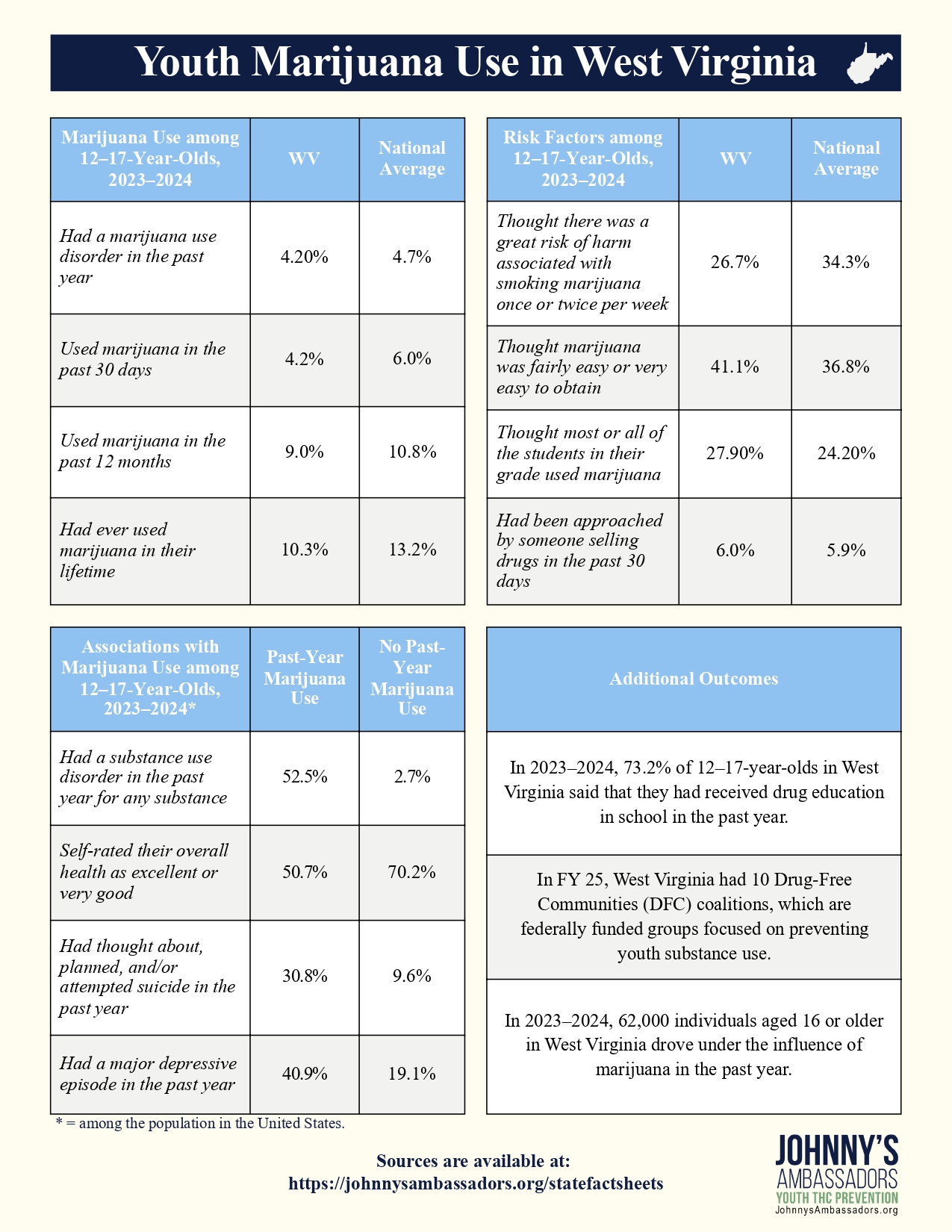
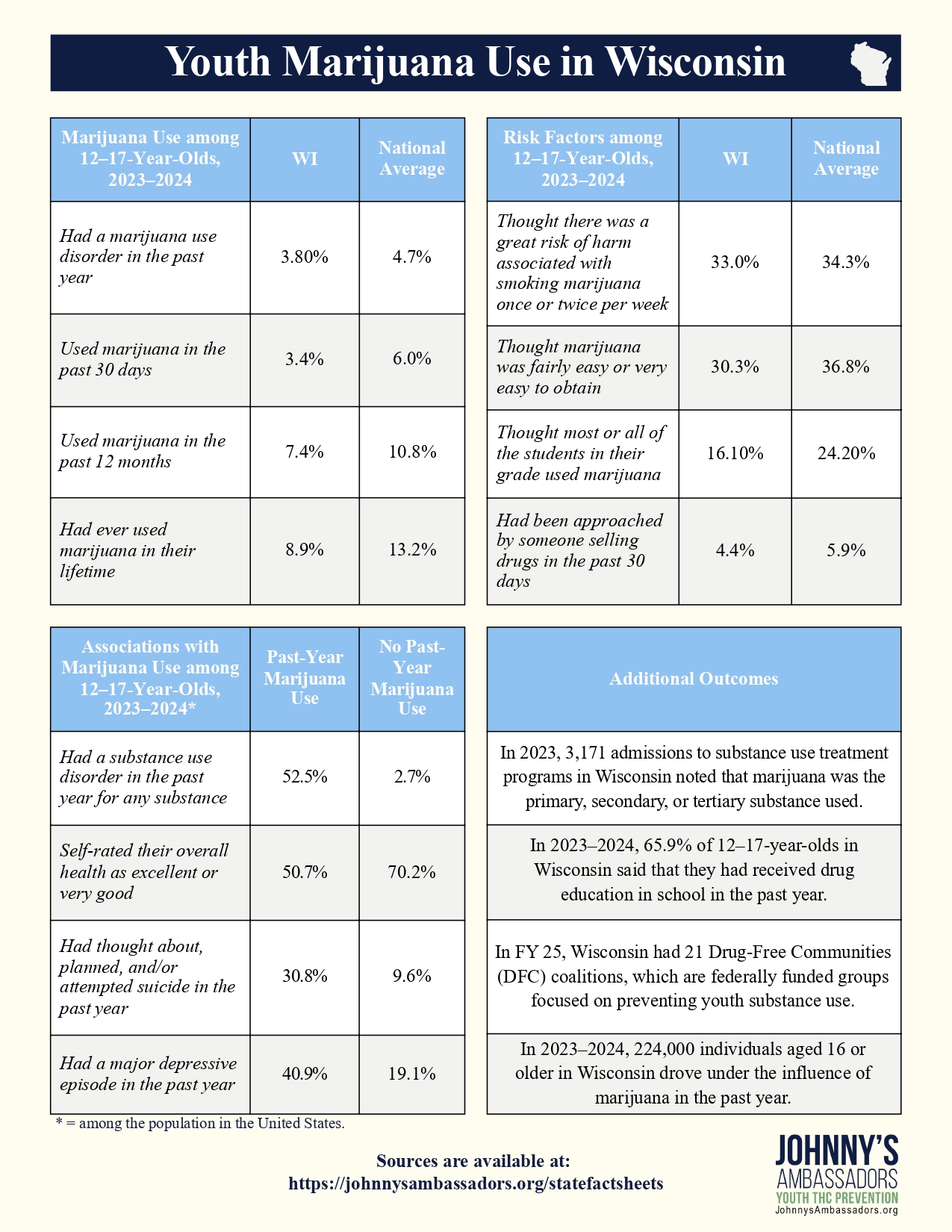
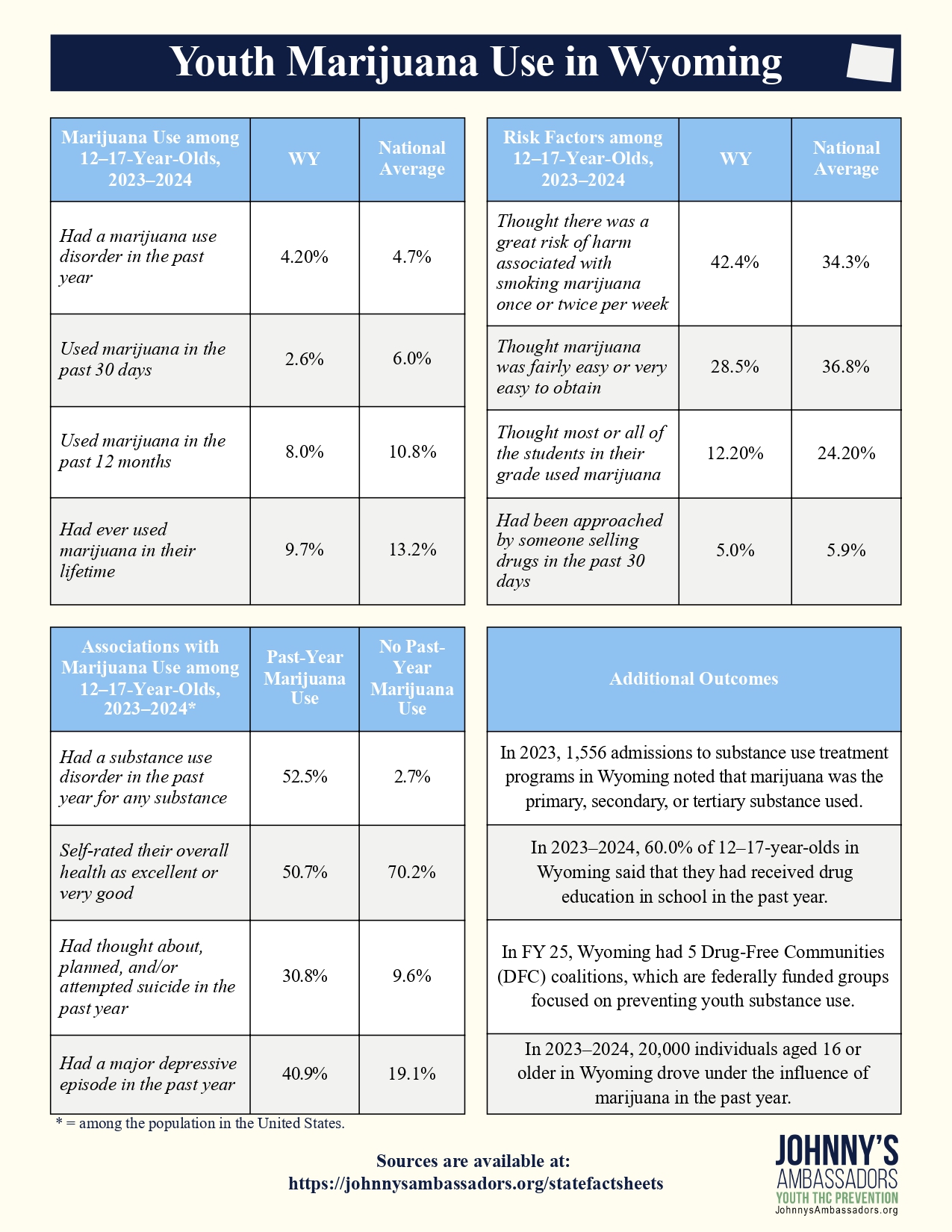
In 2023–2024, the percentage of 12–17-year-olds who had a marijuana use disorder in the past year:
Substance Abuse and Mental Health Services Administration (2026). NSDUH: 2-Year Restricted-use Data (2023-2024).
In 2023–2024, the percentage of 12–17-year-olds who used marijuana in the past 30 days:
Substance Abuse and Mental Health Services Administration (2026). NSDUH: 2-Year Restricted-use Data (2023-2024).
In 2023–2024, the percentage of 12–17-year-olds who used marijuana in the past 12 months:
Substance Abuse and Mental Health Services Administration (2026). NSDUH: 2-Year Restricted-use Data (2023-2024).
In 2023–2024, the percentage of 12–17-year-olds who had ever used marijuana in their lifetime:
Substance Abuse and Mental Health Services Administration (2026). NSDUH: 2-Year Restricted-use Data (2023-2024).
In 2023–2024, the percentage of 12–17-year-olds who had a substance use disorder in the past year by whether they used marijuana in the past year:
Substance Abuse and Mental Health Services Administration (2026). NSDUH: 2-Year Restricted-use Data (2023-2024).
In 2023–2024, the percentage of 12-17-year-olds who rated their overall health as excellent or very good in 2023-2024 by whether they used marijuana in the past year:
Substance Abuse and Mental Health Services Administration (2026). NSDUH: 2-Year Restricted-use Data (2023-2024).
In 2023–2024, the percentage of 12-17-year-olds who had thought about, planned, and/or attempted suicide in the past year by whether they used marijuana in the past year:
Substance Abuse and Mental Health Services Administration (2026). NSDUH: 2-Year Restricted-use Data (2023-2024).
In 2023–2024, the percentage of 12-17-year-olds who had a major depressive episode in the past year by whether they used marijuana in the past year:
Substance Abuse and Mental Health Services Administration (2026). NSDUH: 2-Year Restricted-use Data (2023-2024).
In 2023–2024, the percentage of 12-17-year-olds who thought there was a great risk of harm associated with smoking marijuana once or twice per week:
Substance Abuse and Mental Health Services Administration (2026). NSDUH: 2-Year Restricted-use Data (2023-2024).
In 2023–2024, the percentage of 12-17-year-olds who thought marijuana was fairly easy or very easy to obtain:
Substance Abuse and Mental Health Services Administration (2026). NSDUH: 2-Year Restricted-use Data (2023-2024).
In 2023–2024, the percentage of 12-17-year-olds who thought most or all of the students in their grade used marijuana:
Substance Abuse and Mental Health Services Administration (2026). NSDUH: 2-Year Restricted-use Data (2023-2024).
In 2023–2024, the percentage of 12-17-year-olds who had been approached by someone selling drugs in the past 30 days:
Substance Abuse and Mental Health Services Administration (2026). NSDUH: 2-Year Restricted-use Data (2023-2024).
In 2023, the number of admissions to substance use treatment programs that noted that marijuana was the primary, secondary, or tertiary substance used:
Substance Abuse and Mental Health Services Administration (2026). Treatment Episode Data Set — Admissions (TEDS-A), 2023.
In 2023–2024, the percentage of 12–17-year-olds who said they had received drug education in school in the past year:
Substance Abuse and Mental Health Services Administration (2026). NSDUH: 2-Year Restricted-use Data (2023-2024).
In FY 25, the number of Drug-Free Communities (DFC) coalitions:
Centers for Disease Control and Prevention (2026). Drug-Free Communities Coalitions.
In 2023–2024, the number of people aged 16 or older who drove under the influence of marijuana in the past year:
Substance Abuse and Mental Health Services Administration (2026). NSDUH: 2-Year Restricted-use Data (2023-2024).