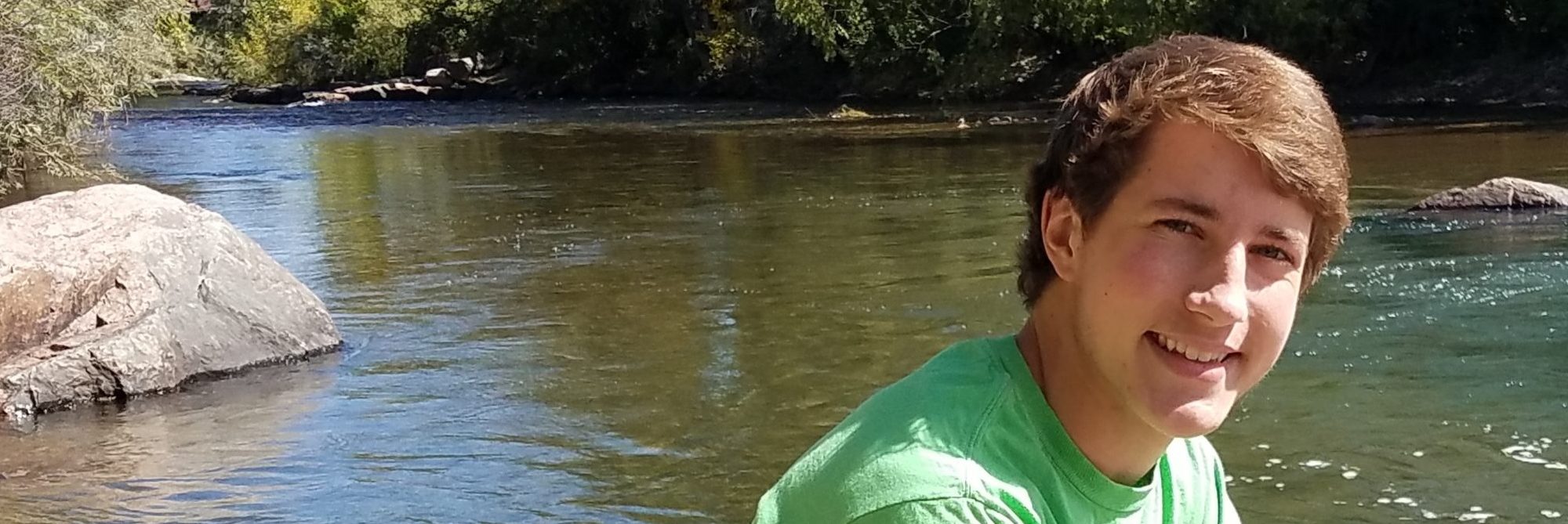
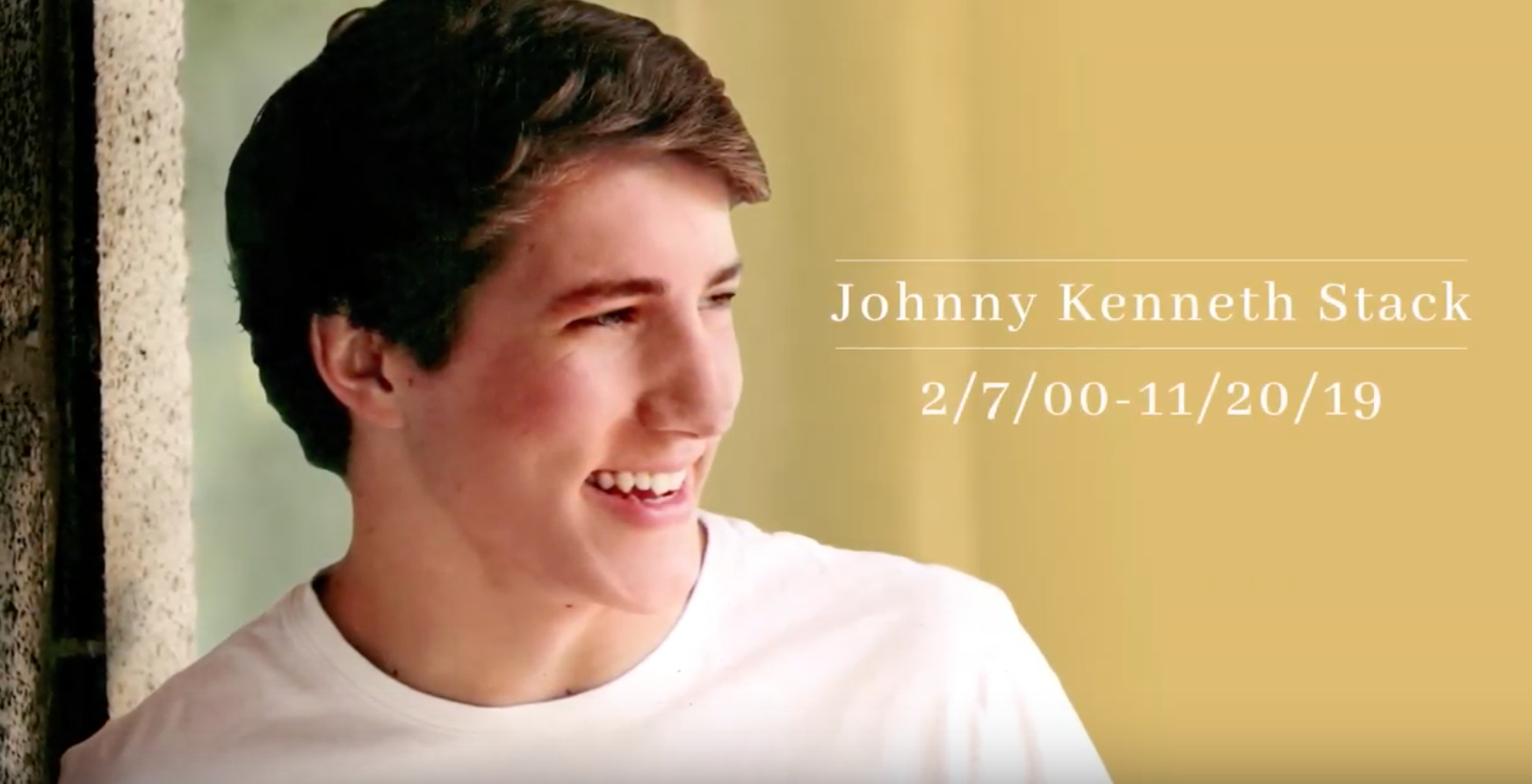
My world shattered on November 20, 2019, when my nineteen-year-old son, Johnny, died by suicide. Johnny, his dad’s namesake, was a sweet, intelligent boy raised in a loving family. An honor student who attended church and youth group, he embodied a spirit of service and was a loyal friend. He participated in sports and took piano and guitar lessons. Johnny didn’t end his life because of a preexisting struggle with mental health. Rather, it was high-potency THC products—which became legally and readily available in our home state of Colorado when he was just fourteen—that completely unraveled his mind.
Despite our desperate efforts to save him, Johnny became trapped in the grip of cannabis-induced psychosis (CIP), a terrifying medical state characterized by severe delusions, paranoia, and a total detachment from reality. CIP is not a mild behavioral phase; it is a profound psychiatric emergency caused by THC physically altering neural processing. Repeated psychotic episodes can cause permanent cognitive fracturing, ultimately resulting in chronic psychotic disorders, including schizophrenia.
Johnny first tried marijuana after feeling pressured at a high school party. I know because he confided in us. Like most parents, we had repeatedly told our children, “Don’t do drugs of any kind, ever. Drugs will ruin your brain. If you never try them, you’ll never get hooked.” At this early point in his use, I had no idea about the extreme addiction potential of today’s THC products, such as dabs, vapes, and gummies. At the time, I lacked an understanding of brain development, as well as the devastating reality that high-potency marijuana could trigger psychosis or cause chronic mental illness.
What started as an effort to fit in with his peers quickly escalated into a destructive habit. By Johnny’s junior year of high school, the drug began drastically altering his personality. My once sweet, high-achieving boy became uncharacteristically hostile toward his girlfriend and withdrew from his closest friends. While he initially managed to maintain his straight-A average, his motivation ultimately evaporated, replaced by hours spent playing video games alone in his room. I noticed him retreating, but I had no idea that his developing brain was being quietly hijacked.
Johnny became highly skillful at concealing his addiction, convincing us that his vape cartridges merely contained nicotine. When I noticed warning signs—like a telltale haze in his bedroom—he dismissed my concerns with a shrug, insisting that it was no big deal and that everyone did it. I remained entirely unaware, fighting a desperate, uphill battle against a hidden chemical dependency that was already eroding my son’s mind.
Over time, brain chemistry is fundamentally altered, making quitting far more than a simple matter of willpower. The developing brain becomes trapped in an invisible, structural dependency—precisely what my son was up against—where the body desperately needs the drug just to function.
We tried everything to get Johnny to stop using marijuana. With the help of his therapist, we wrote an ultimatum letter, outlining clear rules and consequences. We tracked his phone and vehicle. We confiscated things he valued, such as his car and laptop. When he started skipping school his senior year, we banned his video games until his attendance and grades improved. We destroyed every piece of paraphernalia that we uncovered in our searches. We tried treatment centers and mental hospitals.
As our efforts failed, Johnny grew increasingly aggressive and erratic, forcing us to install locks on our bedroom doors. We were afraid of him and weren’t sure he wouldn’t show up in our bedroom with a knife in the middle of the night. Ultimately, when Johnny turned eighteen, with his agreement, we enforced the final consequence of removing him from the home for our own safety and that of our younger son. Also desperate to keep Johnny safe, we found a local room to rent close to his high school.
We later discovered that Johnny utilized his newfound freedom to obtain a “medical” marijuana card and even began selling marijuana products to younger adolescents. In Colorado, while eighteen-year-olds cannot legally acquire tobacco or alcohol, they are able to obtain a medical marijuana card without parental knowledge or approval. They just need to find a doctor who will write a “recommendation” based on an unverifiable ailment, such as migraines. I have no idea what Johnny would have told the “pot shop doc” to get a med card, as he was perfectly healthy. The dispensary situation in Colorado mirrors the “pill mills” of the opioid crisis. The reality is that a “regulated” cannabis industry is sacrificing the minds and souls of our children by allowing eighteen-year-olds to access marijuana. Then he became a high school drug dealer. No black market is needed. This happens in every high school in the U.S. where “medical” cards are available for 18-year-olds. When I give school assemblies, the students tell me it’s happening there, too.
During Johnny’s last high school semester, he got 4 D’s and barely graduated. He had twenty-one unexcused absences and thirty-five total absences in just eighty-seven days. Working closely with his school counselor, I made sure he met the minimum requirements to graduate. Buoyed by his previous 4.0 GPA, which had now fallen to 3.2, Johnny marched across that stage with his long unkempt hair and a smile on his face, his honor cords flowing. No one in the crowd would have known he was high as a kite and suffering from addiction.
We would invite Johnny to dinner periodically to check in and feed him a home-cooked meal. During one of these visits, he made a chilling announcement: “I just love marijuana. I’m going to smoke it for the rest of my life!” He insisted that it made him feel great and that he was automatically accepted by a new social circle. I learned through our younger son that Johnny had lost his true friends due to the choices he was making. The only bond he shared with his new peers was smoking weed together. I continued to beg Johnny to let me help him stop using, but he always countered, “Mom, I’m fine. Leave me alone.” He wasn’t fine.
The fall after he graduated, Johnny started college at Colorado State University (CSU). During his first two weeks, he was dabbing high-potency concentrates nonstop with his roommate. He texted me that he felt like killing himself every day. He was admitted to a psychiatric hospital for suicidal ideation and was diagnosed with “THC Abuse—Severe.” They let him out after a few days, and he did have a suicide attempt, after which he was readmitted to the mental hospital. They held him for several weeks this time, and the THC finally left his body. The “old” sweet Johnny returned, and he was very scared. He gave up his scholarship to CSU and moved back home, where he stopped using THC and remained sober for several months.
Johnny made a second college attempt after receiving a scholarship from the University of Northern Colorado (UNC). Unfortunately, he started vaping and dabbing again. Within a few months, he called me at 3 a.m., claiming his dorm room was bugged and that UNC was an FBI base. This acute delusion landed him right back in the psychiatric hospital, where this time he was diagnosed with Cannabis-Induced Psychosis (CIP) and prescribed an antipsychotic, which brought him back to reality again. After he lost his second scholarship, we moved him into our condo down the road. Soon, he began a fresh start at recovery—sober, employed, and accompanied by a new furry companion, Benji. We were hopeful.
A short time later, reuniting with a former bad-news girlfriend triggered a relapse, and Johnny began dabbing again. After a devastating argument, he had a sudden, profound realization: My life has been ruined by THC. At that moment, he swore he would never return to marijuana again.
Tragically, when Johnny stopped using cannabis, he simultaneously quit his antipsychotic medication. The psychiatrist told me he would need to be on the antipsychotic for six to nine months, at which time we would slowly start to cut back. But Johnny just stopped cold turkey. This opened the floodgates for the return of his delusional thinking. In his final days, after writing in his journal that the FBI and the mob were after him again, he jumped from a building to escape a threat that existed only in his mind.
Three days before his death, Johnny and I had engaged in a comforting, heartfelt discussion about making a commitment to live for Jesus. He then hugged me and said, “Mom, I want you to know you were right. You told me marijuana would hurt my brain. Marijuana has ruined my mind and my life. I’m sorry, and I love you.” His words and embrace signaled to me that he wanted to find peace between us. Our relationship had been strained for years due to his behavior during psychotic episodes. Yet, he always knew that I was “his person” and that I loved him unconditionally. Looking back, I realize that this precious act of reconciliation may have been an agonizingly subtle suicide warning. If so, I missed it.
In the wake of the unbearable loss of my son, I started Johnny’s Ambassadors, a nonprofit organization dedicated to youth THC prevention (JohnnysAmbassadors.org). My mission became singular: to elevate Johnny’s final insight into a lifesaving message by educating parents, teens, and communities about the catastrophic dangers of today’s commercialized, high-potency marijuana. I now speak at over 100 student assemblies and prevention conferences each year, reaching hundreds of thousands of teens and adults who work with teens across the United States.
Our work brings to life one of Johnny’s core values: altruism. In a college essay, he wrote, “To me, altruism means being selfless or giving to other people, even when there may be nothing to gain and something to lose. Altruistic people do things for the collective interest instead of their own.” Today, nearly 20,000 Johnny’s Ambassadors around the globe stand together to save the lives of our next generation from the harm of marijuana. In the same essay, he said his mother was his role model for his value of conviction. I will complete this ministry the best I can to uphold his image of me.
Throughout this journey, I have realized that our greatest obstacle is a dangerous, heavily funded myth perpetuated by a multibillion-dollar commercial industry: the lie that marijuana is a harmless, natural plant. The modern cannabis landscape is no longer an agricultural industry; it is a corporate enterprise that maximizes profit by engineering products designed to capture and exploit the developing adolescent brain.
The public remains largely unaware of the transformation of this drug over the decades. The low-potency, natural flower of the 1970s through the 1990s—which averaged 2% to 5% THC—has been systematically replaced by chemically isolated concentrates. Vapes, dabs, and wax concentrates routinely reach 80% to 95% pure THC. These sticky extracts are created when chemical solvents strip away the plant matter, leaving behind a highly concentrated form of the drug. The result is that developing brains are flooded with a level of neurotoxicity that the human brain was never meant to handle—an exposure previous generations never experienced. Even today’s “natural” marijuana plant is cultivated to contain 15% to 30% THC. It is not “just weed” anymore.
There is no scenario in which cannabis is guaranteed to be harmless. People can develop CIP the first time they use THC. Individuals with no genetic predispositions or known family history of addiction or mental illness are also vulnerable to CIP and can become addicted to marijuana. Having certain genes does not automatically cause addiction or disorders like psychosis and schizophrenia. Genes usually require a trigger—an environmental change that pushes the brain over the edge—and marijuana frequently provides that catastrophic catalyst. The same mandate applies to everyone: Stay away from THC.
My sense of urgency to spread Johnny’s message led me to write my first book on this topic. The Dangerous Truth About Today’s Marijuana: Johnny Stack’s Life and Death Story is my raw account of losing my child to this entirely preventable, industry-driven epidemic. For a long time, society has comforted itself with the stereotype that drug-induced tragedies only happen to children with difficult home lives, academic struggles, or preexisting behavioral issues. Johnny’s story shatters the illusion of the “vulnerable youth” typology and proves that THC is an equal-opportunity destroyer.
My second volume on the subject, The Impact of THC on Our Children: A Parent’s Worst Nightmare, expanded the lens by amplifying the voices of moms and dads. It provides a devastating look at the collective trauma twenty-five families faced as they watched their children succumb to CIP. These raw narratives describe grief-stricken parents who fiercely fought to bring their children back to reality, all while navigating a broken medical system.
Our third book, CIP AND ME – How Cannabis-Induced Psychosis Ruined My Mind and My Life, and How I Came Out the Other Side, will be released this fall! This book adds an essential piece of the puzzle: the voices of survivors themselves. This volume is an intimate, unfiltered collection of personal narratives written by ten courageous individuals who personally experienced CIP and lived to tell the tale—the outcome I so deeply wished for Johnny.
Please help us continue to educate teens, parents, and communities about the dangers of today’s potent THC products (marijuana, dabs, vapes, edibles) on youth addiction, adolescent brain development. We have come so far but still have so much work to do to prevent youth THC use. Please contribute to our annual fundraising campaign to help us further our mission at JohnnysAmbassadors.org/donate. Together, let’s save our children’s minds from THC.
—Laura Stack
[email protected]
Founder & CEO, Johnny’s Ambassadors